About Carpobrotus deliciosus (L.Bolus) L.Bolus
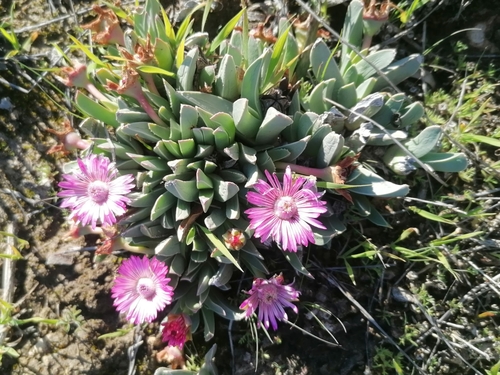
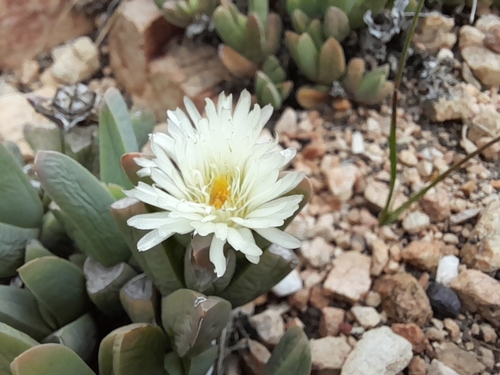
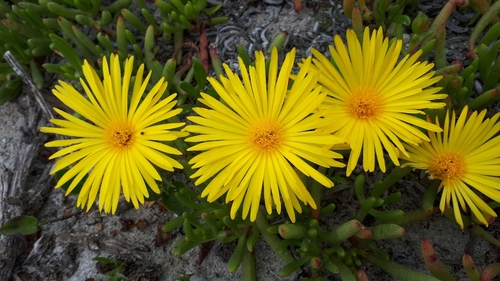
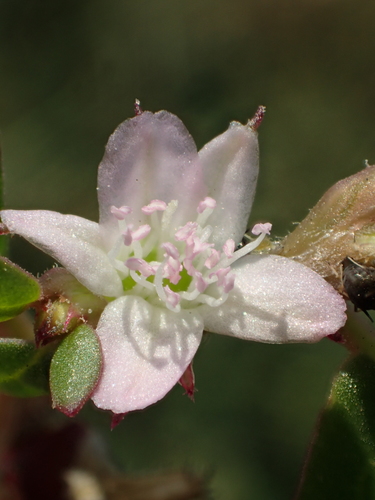
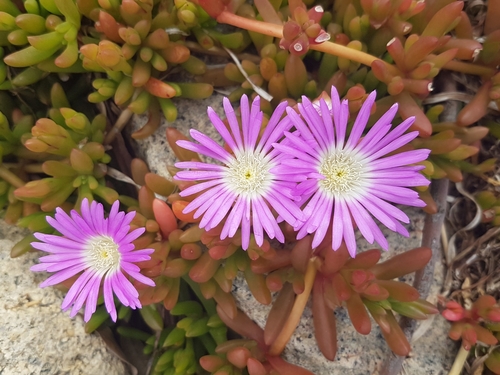
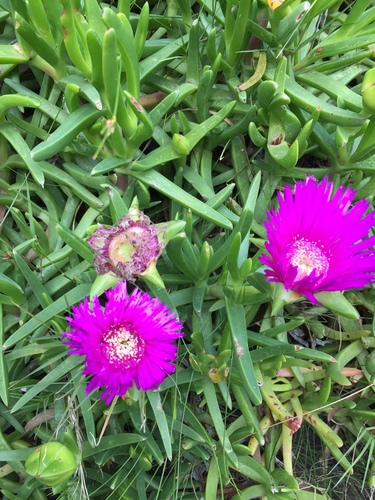
The flowers of this Carpobrotus, commonly called "Sour-fig", species range in colour from purple and pink to white. After flowering, the plant produces fruits that are less sour and more pleasant tasting than the fruits of its close relatives, which is how the species gained its specific name deliciosus. The receptacle is characteristically subglobose or bowl-shaped, and it narrows abruptly at the base where it connects to the pedicel. The top of the ovary is often raised at its centre. Its leaves are almost straight, slightly subacinaciform, and curve mainly at the tip. Leaf colour ranges from green to glaucous-green, and leaves sometimes turn reddish over time. This species is indigenous to coastal rocks, dunes, and plains along the far southern coast of South Africa. Its native coastal distribution runs along the entire Eastern Cape coast, extends west into the Western Cape as far as Riversdale, and also reaches northeast into neighbouring KwaZulu-Natal. The species’ sweet, edible fruits are grazed by tortoises and other native southern African animals, and local people also use the fruits to make traditional preserves. Among the six other Carpobrotus species native to South Africa, C. deliciosus is most closely related to Carpobrotus muirii, which has a range just west of C. deliciosus’ distribution in the Western Cape.