About Carollia perspicillata (Linnaeus, 1758)
External Morphology
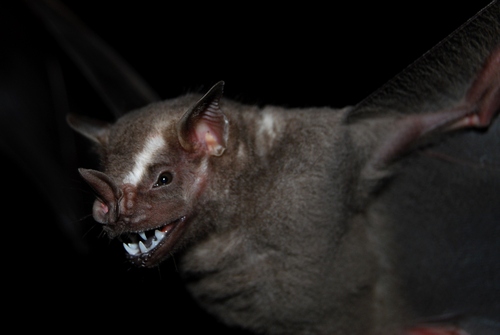
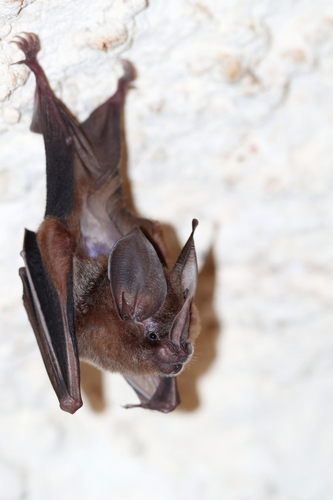
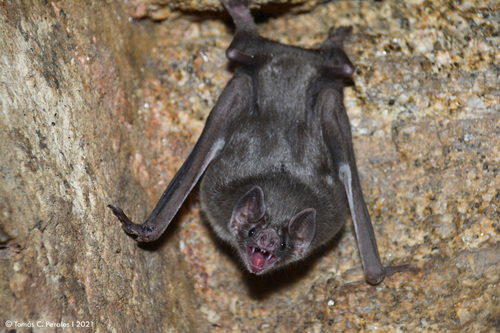
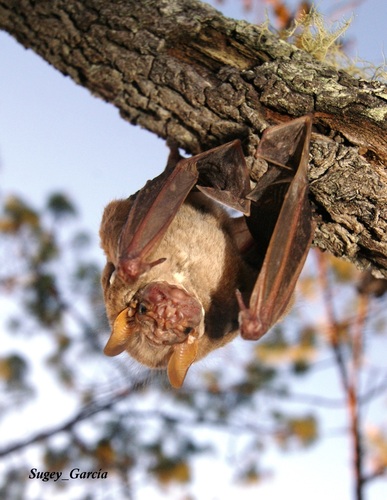
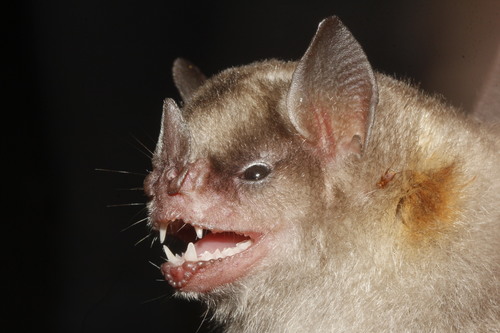
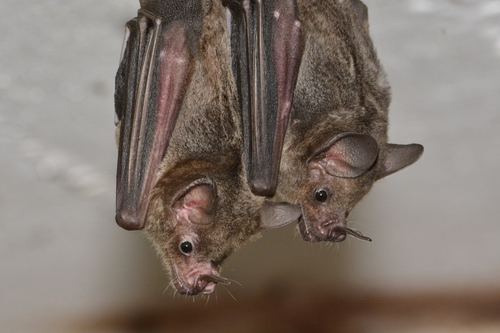
Carollia perspicillata is a small to medium-sized bat with relatively short ears and a short, triangular noseleaf.
Fur Characteristics
Its fur is dense and soft, and can come in a range of colors from black to brown to gray; both albino and orange individuals have been recorded in some regions.
Sexual Dimorphism Variation
Sexual dimorphism in this species varies by geography. In Colombia, there are no size or color differences between males and females. In the West Indies, females are usually larger, while males are larger in all other areas where the species occurs.
Sensory Capabilities
C. perspicillata has a very good sense of smell and good visual acuity, and its auditory apparatus is less specialized than that of insectivorous bats. Even so, it still uses echolocation as its primary orientation method.
Echolocation Traits
Its echolocation calls are produced through the mouth or nostrils, are intense, and produce the most directional sonar beams recorded in any echolocating bat species.
Geographic Range
C. perspicillata is primarily found in Mexico, Belize, Bolivia, Paraguay, Brazil, and Trinidad and Tobago.
Habitat Preferences
It occurs mostly in forests, including both deciduous and evergreen types. It is typically found near stagnant water, in areas with large amounts of open internal space, and generally lives below 1000 meters in elevation.
Foraging Capture Rate
Due to its foraging habits, this bat is one of the most commonly caught species at ground level.
Mating Displays
For reproduction, males actively attempt to recruit females into their mating harems using vocalization and hovering displays.
Reproductive Periods
This species has two distinct reproductive periods each year: one from June to August, and another from February to May. The June–August period aligns with the season of high fruit production, while the February–May period aligns with the season of large flower abundance.
Gestation and Newborn Traits
Gestation lasts approximately 120 days, and newborns are precocial.
Juvenile Development
Young grow quickly, reaching full adult body weight after 10 to 13 weeks, and usually leave their parental harem after around 16 weeks.
Sexual Maturity Timing
All females reach sexual maturity by one year of age, while males reach sexual maturity within their first two years of life.
Offspring Vocal Recognition
Mothers communicate with their offspring through vocalization, and can discriminate between the calls of their own offspring and the offspring of other females.
Maternal Response Behavior
Mothers display more maternal approach behaviors when they hear the calls of their own young, and more experienced mothers show greater approach behavior than first-time mothers.
Paternal Behavior
Males do not exhibit this same response to offspring calls. Instead, males harass females until the females go care for the young, and do not attend to the young themselves.