About Cardamine pratensis L.
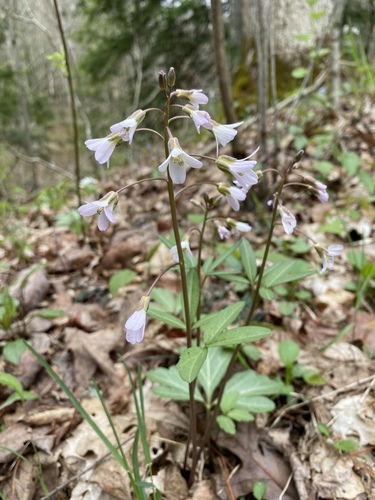
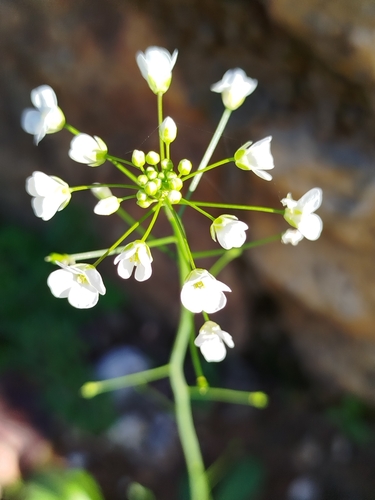
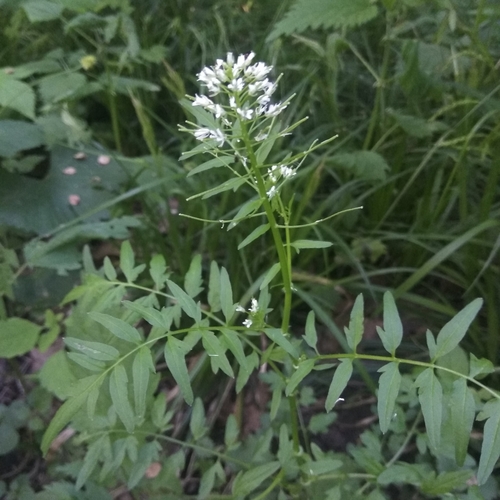
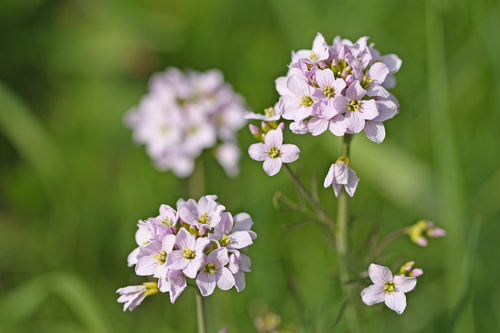
Cardamine pratensis L. is a hairless, herbaceous perennial plant that grows up to 60 centimetres (24 inches) tall. It produces pinnate leaves that are 5–12 cm (2–4 3⁄4 inches) long, each with between 3 and 15 leaflets that measure approximately 1 cm long. Its flowers form on a 10–30 cm (4–12 inch) long spike; each individual flower is 1–2 cm in diameter, with four very pale violet-pink petals that are rarely white, plus six stamens. The fruit is a seed pod that can reach up to 5 cm (2 inches) long. This species grows best in locations close to water. It is widespread across Europe, and is commonly found throughout the British Isles. In Ireland, it has been recorded in all 40 vice-counties, the recording system adopted by Robert Lloyd Praeger in 1901. It is cultivated as an ornamental garden plant, and has become naturalised in North America after being introduced for cultivation. In some European countries, including parts of Germany, this plant is currently under threat. It acts as a food plant for Anthocharis cardamines, the orange-tip butterfly. The plant is edible, with a peppery taste similar to watercress.