About Cardamine diphylla (Michx.) A.W.Wood
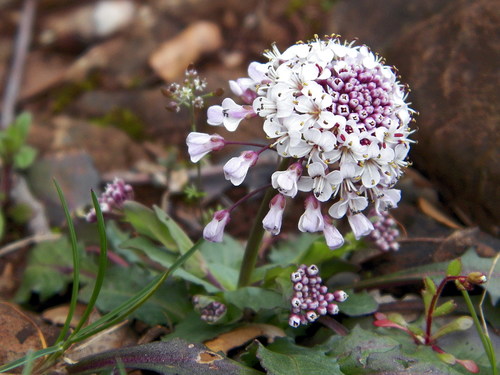
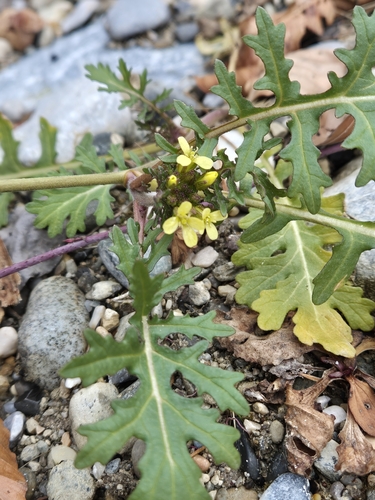
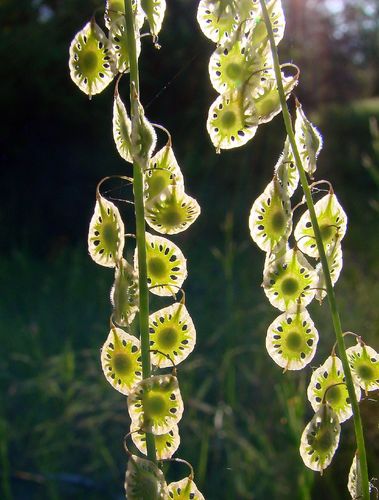
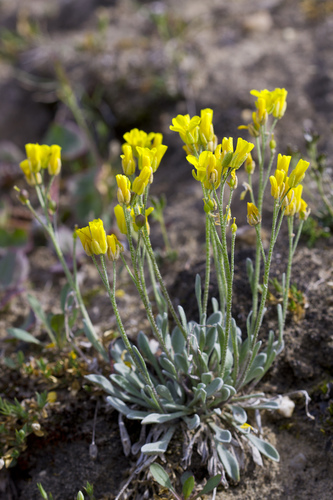
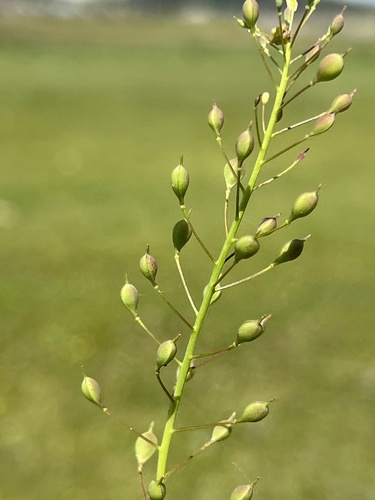
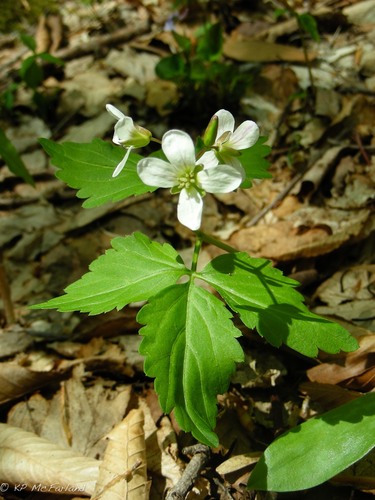
Cardamine diphylla (Michx.) A.W.Wood is a member of the mustard family. This plant typically grows to approximately 30 cm (12 in) tall. It produces four-petaled flowers that bloom in a cluster on a single stalk, positioned above one pair of toothed stem leaves; each stem leaf is divided into three broad leaflets. After flowering finishes, narrow seedpods develop just below the flower cluster.
Cardamine diphylla is native to eastern North America. Its broad range extends north to Québec and Nova Scotia, south to Georgia and Alabama, and west to Wisconsin. It has been recorded in the following Canadian provinces: New Brunswick, Nova Scotia, Ontario, Québec. In the United States, it occurs in Alabama, Arkansas, Connecticut, Georgia, Indiana, Kentucky, Maine, Maryland, Massachusetts, Michigan, Minnesota, New Hampshire, New Jersey, New York, North Carolina, Ohio, Pennsylvania, South Carolina, Tennessee, Vermont, Virginia, West Virginia, Wisconsin. The center of its distribution is the Great Lakes region of North America. It grows in moist woodlands, most often in edge habitats, and blooms from April to June.
In ecological interactions, the West Virginia white butterfly (Pieris virginiensis) lays its eggs on this plant, alongside Cardamine laciniata, and the butterfly's larvae feed on Cardamine diphylla. Just like with Pieris oleracea, Pieris virginiensis mistakenly identifies invasive garlic mustard as a host plant, so eradicating garlic mustard is important for the continued survival of Pieris virginiensis. Garlic mustard also competes with Cardamine diphylla for space and nutrients.
Multiple Indigenous North American groups have recorded medicinal and food uses for the plant. The Algonquin people of Quebec mix the ground root with vinegar to use as a relish, give an infusion of the plant to children to treat fevers, and use an infusion of the plant combined with sweet flag root to treat heart disease. The Cherokee use a poultice made from the root for headaches, chew the root to treat colds, and gargle an infusion of the plant for sore throats. The Lenape use the roots as a stomach medicine, and use an infusion of the roots mixed with other plants to treat scrofula and venereal disease. The Delaware Nation of Oklahoma uses a compound containing the root as a stomach remedy, and to treat scrofula and venereal disease.
The Iroquois use an infusion of the whole plant to strengthen the breasts; they also chew the raw root to relieve stomach gas, apply a poultice of the roots to swellings, take a cold infusion of the plant for fever and "summer complaint", drink a cold infusion of the roots for "when love is too strong", use an infusion of the roots for "when heart jumps and the head goes wrong", use a compound including the plant for chest pains, and take an infusion of the plant at the onset of tuberculosis. The Malecite use an infusion of the roots as a tonic, and chew green or dried roots for hoarseness. The Micmac use the root as a sedative, to clear the throat and treat hoarseness, and also use the root as a tonic.