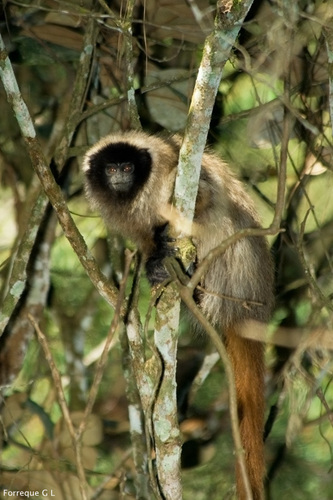
About Callicebus personatus (É.Geoffroy Saint-Hilaire, 1812)
Nomenclature and Basic Classification
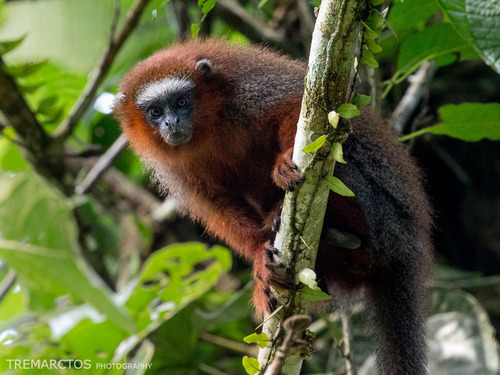
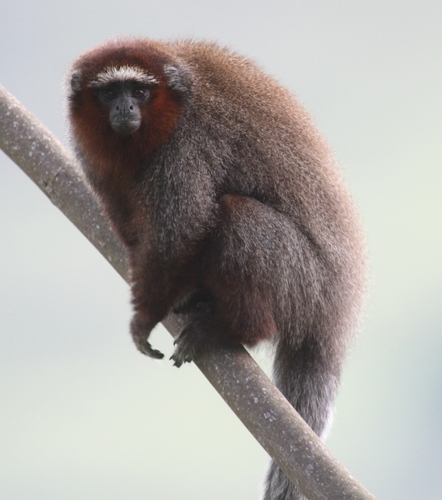
The Atlantic titi monkey, also called the masked titi, has the scientific name Callicebus personatus. It is a species of titi, a kind of New World monkey, that is endemic to Brazil.
Original Genus Classification
This species belongs to the genus Callicebus, which originally includes thirteen species and sixteen subspecies. More recent classification systems for titis recognize many more species, and have split the original genus into three separate genera.
Current Genus Placement
The C. personatus species group is still kept in the genus Callicebus.
Described Subspecies
Three subspecies of Callicebus personatus have been formally described in scientific literature: C. p. melanochir, C. p. nigrifrons, and C. p. personatus. Some authors have treated each of these three as a full separate species.
Physical and Behavioral Traits
Atlantic titis are territorial, medium-sized cebid monkeys, and usually weigh between 1 and 2 kilograms.
General Habitat Range
They are primarily found in humid forests east of the Andes Mountains, specifically in coastal and inland forests of southeastern Brazil.
Documented Distribution in Brazil
Documented states where they live include Bahia, Espírito Santo, Minas Gerais, Rio de Janeiro, and São Paulo.
Geographic Range Size
Among all Callicebus species, Atlantic titi monkeys have the second largest geographic range (only smaller than that of C. torquatus), with their range covering approximately 1,000 kilometers.
Sympatric Monkey Species
They commonly share their habitat with other monkey species, including lion tamarins and spider monkeys.
Mating System
Atlantic titis are typically monogamous, meaning they stay with a single mate for their entire lifespan. They produce one offspring per year.
Parental Care Dynamics
There are no clear external differences between males and females of this species, but observations of the species' family dynamics show that the father carries the infant at all times during the nursing period.