About Buergeria otai Wang, Hsiao, Lee, Tseng, Lin, Komaki & Lin, 2018
Size
In Buergeria otai, adult males measure 23–29 mm (0.91–1.14 in) and adult females 30–38 mm (1.2–1.5 in) in snout–vent length.
Body Shape
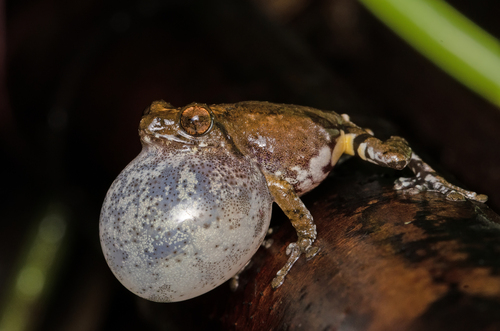
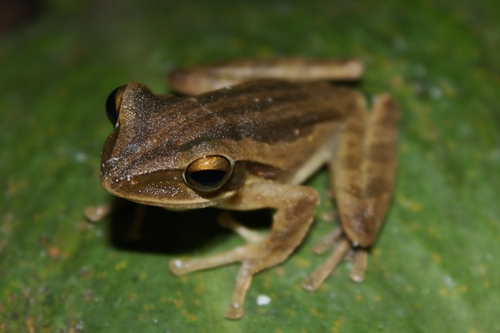
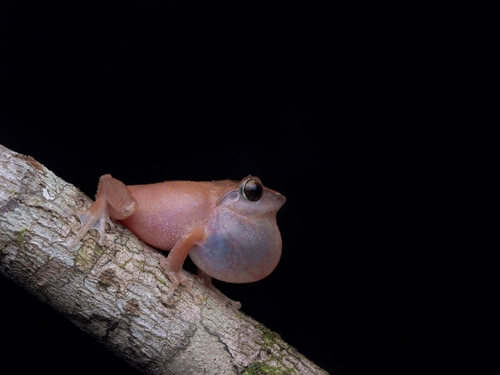
The species has an elongated, moderately slender body. The tympanum is barely discernible, while the supratympanic fold is prominent. Males have a comparatively large subgular vocal sac.
Finger Structure
The fingers are slender, lack webbing, and have medium-sized discs.
Toe Structure
The toes are long, partially webbed, and also have medium-sized discs.
Dorsal Color Variability
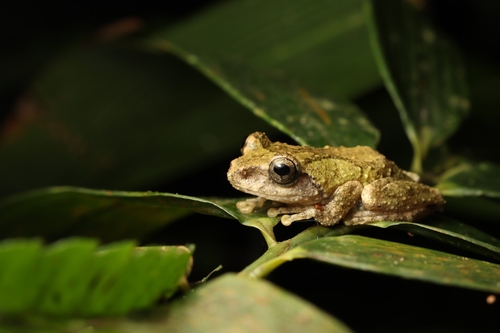
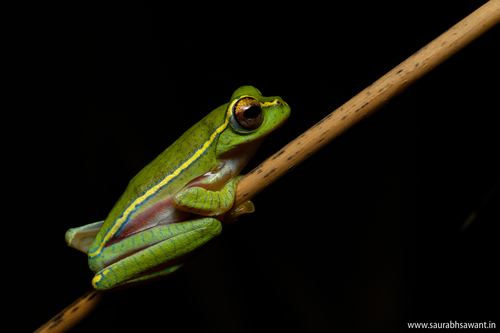
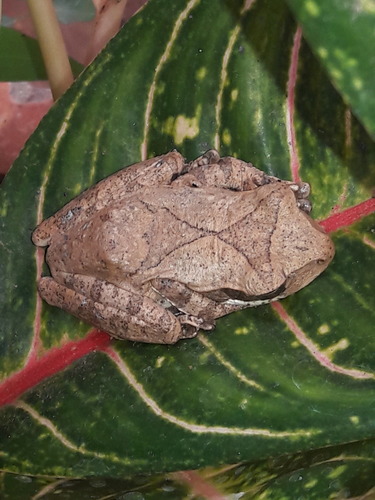
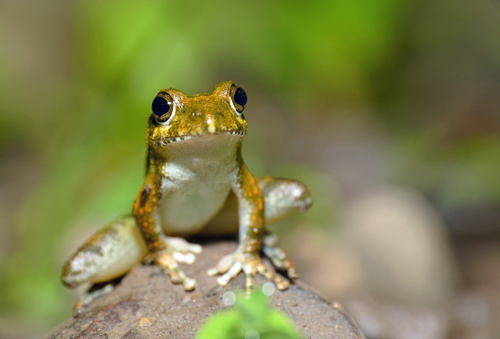
Dorsal coloration is variable, changing with light conditions and background environment. During the daytime, resting individuals are usually grayish. Calling males at night display a range of colors from gray, yellow, gold, and light brown to dark orange.
Dorsal Markings
There is a dark dorsal marking shaped like the letter X or H that may fade almost completely. Females usually turn brownish during amplexus.
Ventral Coloration
The chin and belly are gray-white; the chin has small irregular mottling, and tiny white spots are present on the ventral side of the thighs.
Call Types
Buergeria otai can produce two types of calls: "short calls" that consist of regular, long, consecutive pulses (usually around 16–17 pulses), and "long calls" that have a major peak at the start, a series of very rapid pulses, and typically end with another short peak. Short calls are similar to the calls of Buergeria japonica, while long calls are unique to this species.
Habitat Range
Buergeria otai is associated with streams at elevations below 1,500 m (4,900 ft). It is primarily found in small ditches or shallow waters near streams, rather than in main river channels.
Breeding Period
Reproduction can occur year-round, with peak breeding taking place from April to July.
Tadpole Diet
Tadpoles are benthic herbivores or detritivores that live in shallow waters.
Temperature Tolerance
Like Buergeria choui, Buergeria otai tolerates the high temperatures found in hot springs, and tadpoles may even actively seek out high temperatures. It is unknown whether this species also shares the salt tolerance of Buergeria choui.
Population Status
The original describers, Wang and colleagues, suggest that Buergeria otai may be the most abundant rhacophorid in Taiwan, with large populations especially in eastern Taiwan.
Threat Status
It is considered a fairly adaptable species that does not face major threats.