About Buddleja cordata Kunth
Growth Form
Buddleja cordata Kunth is a large deciduous dioecious shrub or tree that grows less than 20 meters tall in wild populations.
Trunk Characteristics
Its trunk can reach 45 centimeters in diameter, and is covered in brownish or blackish furrowed bark.
Leaf Morphology
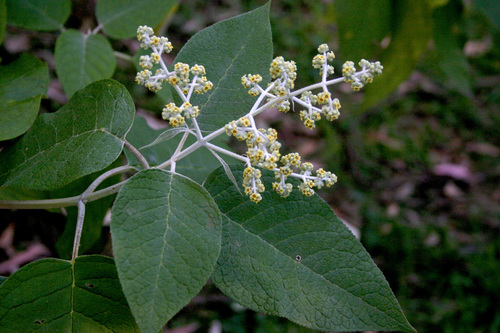
The species bears opposite, paired leaves that range in shape from ovate to narrowly elliptical, measuring 4–23 cm long and 3–14 cm wide, attached to stems by petioles 1–4 cm long.
Inflorescence Structure
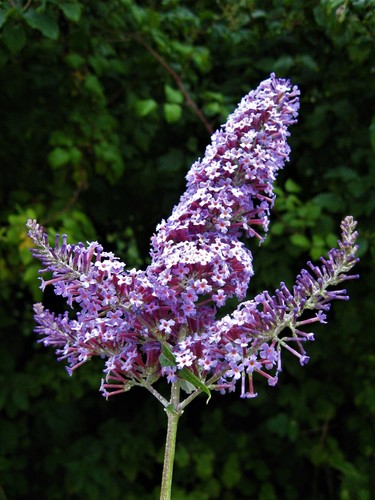
Its terminal inflorescences are paniculate, 6–30 cm long, and have at least two orders of branches; the lowest branches are subtended by leaves, while the uppermost are subtended by small bracts.
Flower Traits
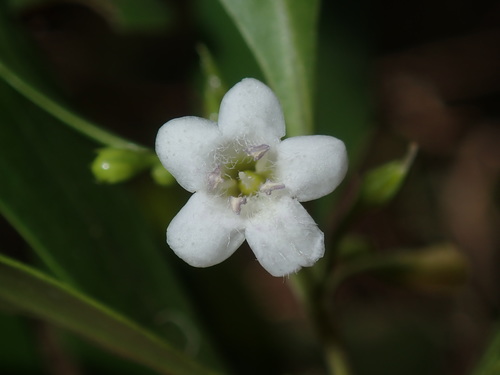
Small fragrant flowers are grouped into shortly pedunculate cymules, with corollas that are white, cream, or yellow with an orange flush at the throat, and measure 1.5–2.5 mm in length.
Ploidy
The ploidy of Buddleja cordata Kunth is 2n = 76, making it a tetraploid.
UK Cultivation Hardiness
For cultivation, the species is cold hardy in the United Kingdom.
Cultivated Specimens
A large specimen grows in the Centenary Border of Sir Harold Hillier Gardens in Hampshire, and another specimen is part of the NCCPG national collection at Longstock Park Nursery, also located in Hampshire.
USDA Hardiness Zone
It is rated hardy to USDA zone 8.
Medicinal Compounds
Buddleja cordata, along with the rest of its genus, contains secondary metabolites including flavonoids and iridoid glycosides that have shown promising results for treating cancer and a wide range of other disorders.