About Brassica elongata Ehrh.
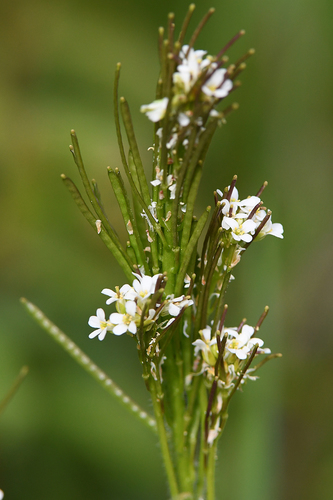
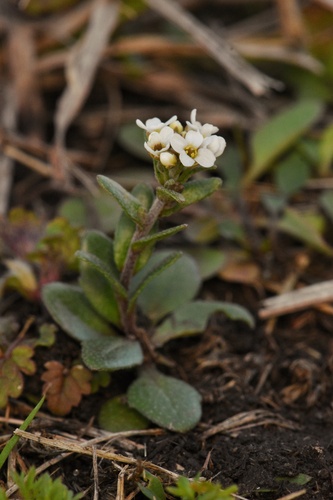
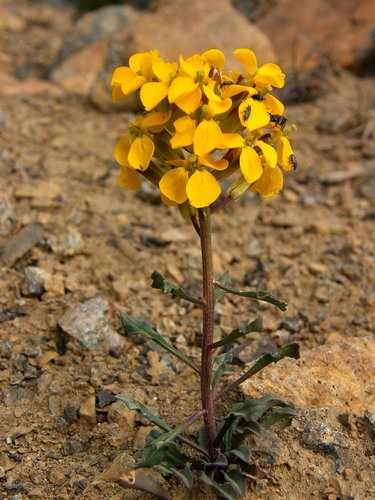
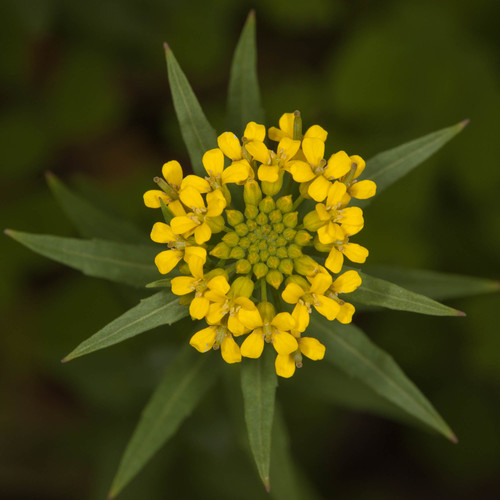
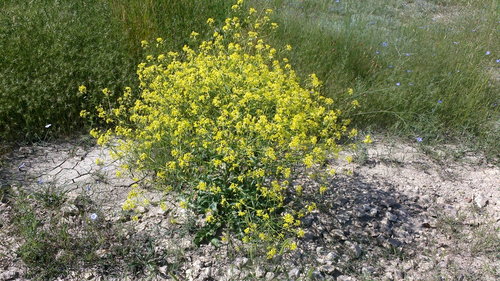
Brassica elongata Ehrh. has five recognised subspecies: elongata, imdrhasiana, integrifolia, pinnatifida, and subscaposa. Its stems grow outward from the base and branch at the basal portion. Basal leaves range from obovate to elliptic in shape, measuring 10–35 millimetres (3⁄8–1+3⁄8 inches) long, with margins that are sub-entire to dentate. Cauline leaves are oblong or lanceolate, and reach up to 10 centimetres (4 inches) in length. Its inflorescence takes the form of a raceme. This species is native to a range extending from Eastern European countries starting at Austria through temperate Asia to Afghanistan and Iran. It is also native to arid areas of Northern Africa near Morocco. As an invasive species, it has spread north to Norway, and southwest into parts of France and Italy. It has also been introduced to large areas of Southern Africa, Southern Australia, and the southwestern United States. In the United States, B. elongata was first collected in Linnton, Oregon, by Wilhelm Suksdorf in 1911, near ship ballast ground where unloading occurred; the subspecies of this collection was not recorded. The next recording of the species in the US was in Bingen, Washington, in 1915. In 1968, despite no prior evidence of spread, American botanist John Thomas Howell discovered Brassica elongata subsp. integrifolia growing along roadsides of U.S. Highway 50 in east-central Nevada. Since that discovery, B. elongata has become a commonly recognizable part of the regional flora in the desert regions of Eureka and White Pine counties, Nevada. B. elongata is a perennial plant that occurs in habitats with semi-arid to arid climates across Europe, central Asia, North America, Africa, and Australia. In the Northern Hemisphere, it flowers between June and July. It can grow on disturbed ground, along roads, and in open juniper and sagebrush desert areas. It produces abundant seeds that germinate across a range of alternating temperatures, though germination rates drop sharply at very cold seedbed temperatures.