About Boechera californica (Rollins) Windham & Al-Shehbaz
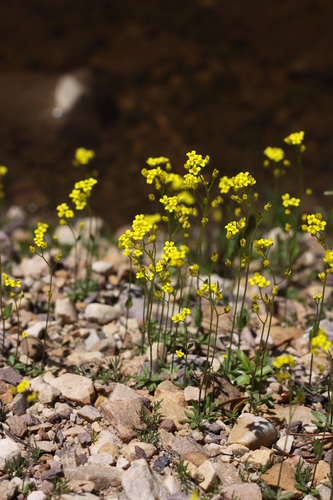
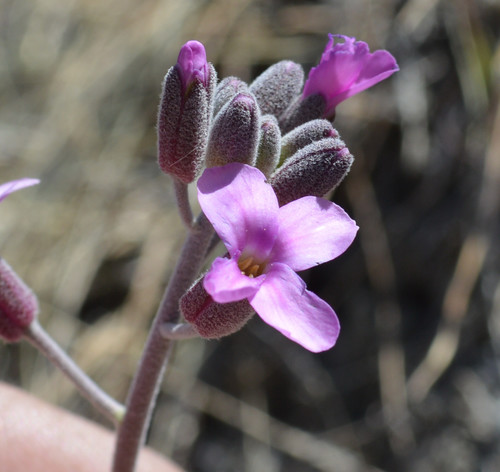
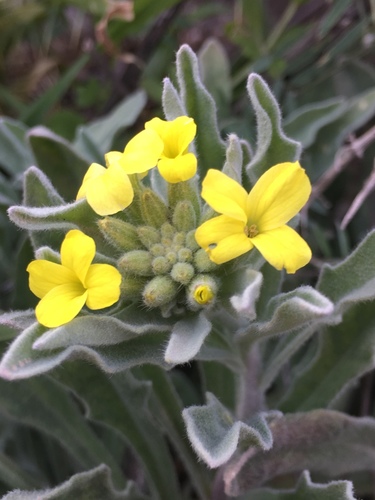
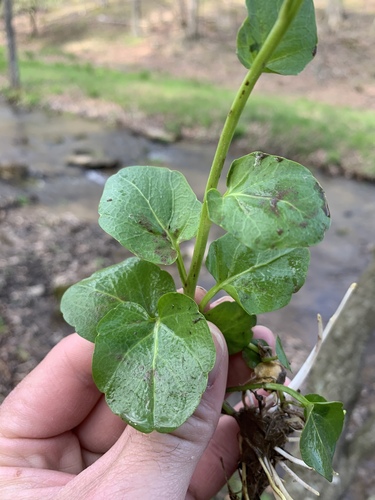
The genus Boechera, commonly called rockcress, belongs to the plant family Brassicaceae. It was named for Danish botanist Tyge W. Böcher (1909–1983), who specialized in research on alpine plants, including the mustards Draba and Boechera holboellii. Recent molecular studies confirm that Boechera is closely related to the genus Arabidopsis, which contains the widely studied model plant Arabidopsis thaliana. Until recently, all members of Boechera were classified within the genus Arabis, but genetic and cytological data have supported separating the two genera. Unlike Arabis, which has a base chromosome number of x=8, Boechera has a base chromosome number of x=7, and many of its taxa are triploid. Boechera is a primarily North American genus, with the highest species diversity in the western United States. Its distribution also extends to Greenland and the Russian Far East. The genus remains understudied, and most species are hard to distinguish from one another using morphological traits, though a number of clearly distinct species have been identified. Most members of the genus are perennials. They typically have pubescent leaves with stellate trichomes, narrow curving fruits, and small white to purple flowers arranged in elongated racemes. Evolutionary relationships within the genus are not yet resolved, and some eastern North American species, such as Boechera laevigata, may belong to a clade that is separate from the rest of the genus. A notable trait of many Boechera species is asexual reproduction through the process of apomixis. Microsatellite data shows that some apomictic lineages are hybrids formed from two or more sexually reproducing parent species. Ecologically, Boechera species are one of the main food sources for caterpillars of the butterfly Pieris oleracea.