About Boana calcarata (Troschel, 1848)
Description
Size Measurements
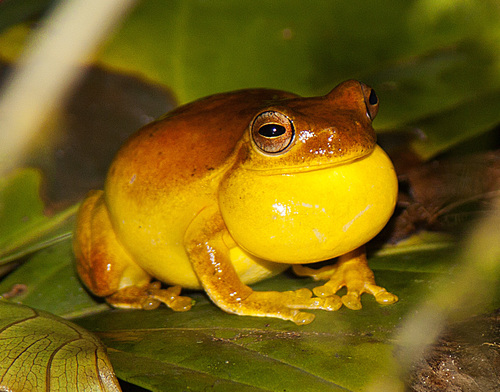
Adult males of Boana calcarata measure 28–43 mm (1.1–1.7 in) in snout–vent length, while adult females measure 46–56 mm (1.8–2.2 in) in this measurement.
Limb Features
The fingers have only basal webbing, and the toes are fully webbed. Males possess pre-pollical spines.
Dorsal Coloration
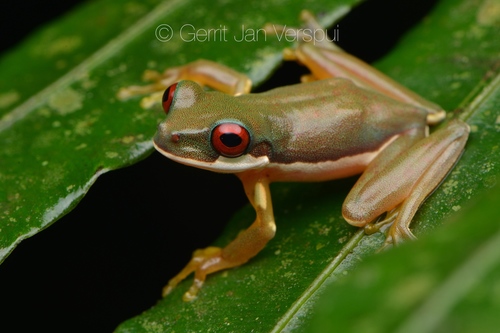
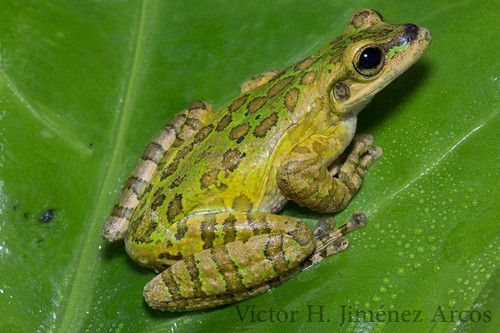
Dorsal coloration ranges from light brown to reddish brown or plain brown. A dark brown middorsal line is present, and some individuals have diffuse brown transversal bands.
Limb and Dorsum Markings
The dorsal surfaces of the limbs have pale brown transversal bars. The dorsum may have scattered minute white and black dots, or large dark brown blotches.
Ventral and Flank Coloration
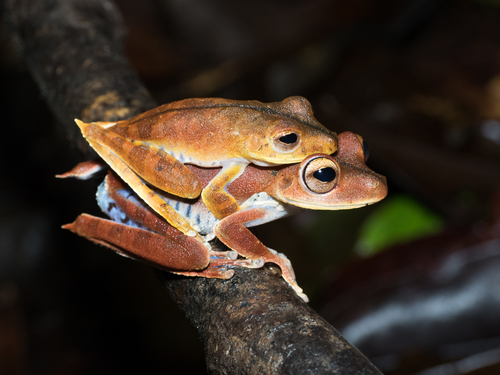
The flanks are white, light blue, or blue, and marked with dark brown vertical bars. The venter is creamy white, and the belly is yellowish white.
Habitat and conservation
Habitat Range
This species lives in tropical rainforest at elevations up to 1,000 m (3,300 ft) above sea level, though most populations are found below 400 m (1,300 ft). It is an arboreal frog.
Breeding and Behavior
In the rainy season, adults can be found perched on stems and small branches above slow-moving streams. Eggs are laid in water, where larvae develop.
Threat Status
Habitat loss linked to forest conversion, logging, clear-cutting, and fire poses a threat to this species. Even so, it is abundant in parts of its range, occurs in protected areas, and is not considered globally threatened overall.