About Berteroa incana (L.) DC.
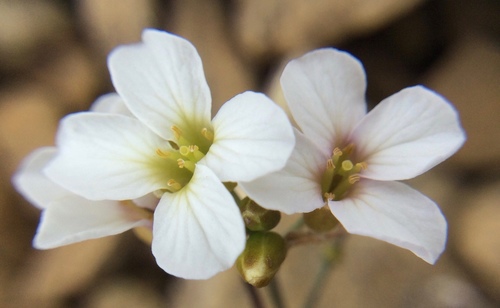
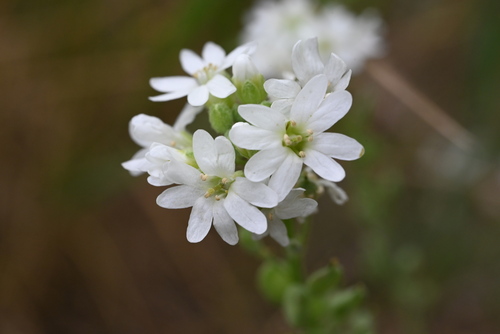
Berteroa incana (L.) DC. is most commonly a biennial herbaceous flowering plant, but it can also grow as an annual or short-lived perennial. The entire plant is covered in hairs, which include flattened star-shaped hairs and simple hairs. It produces one or more upright stems that are usually 30 to 80 centimeters tall, and occasionally grow taller than one meter. Its basal leaves reach up to 8 to 10 centimeters in length; all leaves are hairy and grayish in color. The plant's inflorescence is a dense raceme of flowers. Each flower has four white petals that are roughly half a centimeter long, with a two-lobed tip at the end of each petal. Its fruit is a hairy silicle that grows up to one centimeter long. This plant is toxic to horses. Both its green and dried plant material can sometimes be found mixed into alfalfa feed. Symptoms of poisoning in horses include lameness caused by laminitis, leg edema, stiffness, fever, diarrhea, intravascular hemolysis, hypovolemic shock, premature birth, abortion, gut ulceration, kidney edema, pulmonary edema, and calcium crystals present in the urine. Poisoning can be fatal, though most horses survive if they receive treatment. The identity of the toxic compound responsible for poisoning remains unknown. Berteroa incana is sometimes considered an ornamental plant suitable for landscaping. It is planted to cover waste ground at mining sites and in urban areas across Europe.