About Bellendena montana R.Br.
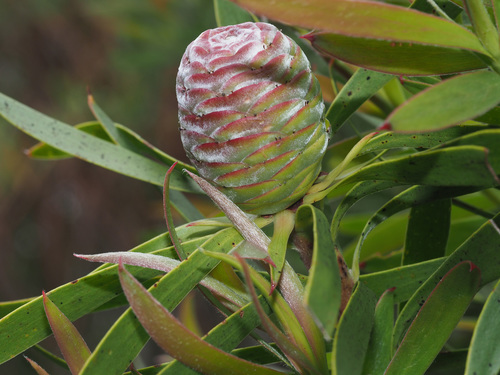
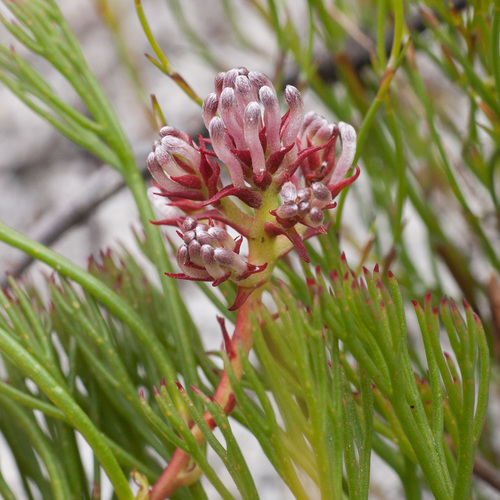
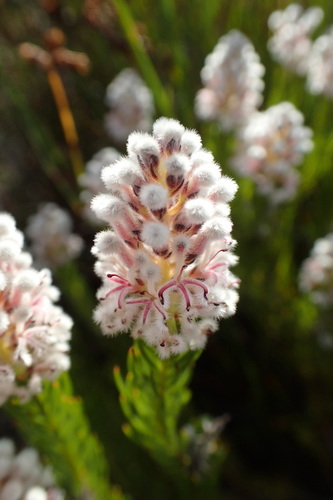
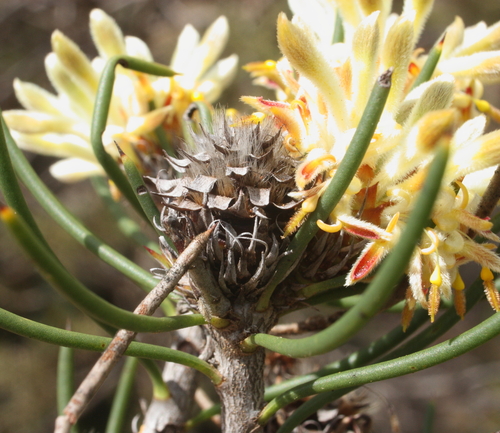
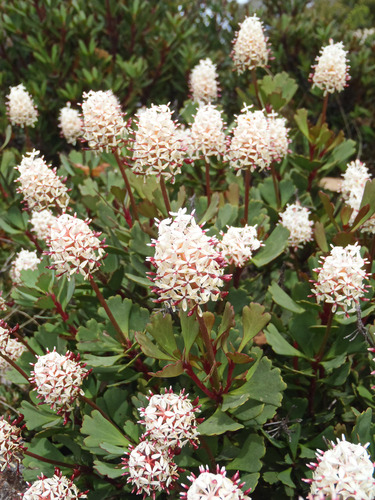
Bellendena montana R.Br. is a low, spreading, multistemmed shrub. It reaches 10 cm (3.9 in) to 1.8 m (5 ft 11 in) in height, and grows to 1 m (3 ft 3 in) across. Its leaves are thick and variable in shape, ranging from oblanceolate to spathulate to wedge-shaped (cuneate), with recurved margins. They measure 1–6 cm (0.4–2.4 in) long and 0.2–2.2 cm (0.08–0.87 in) wide. Plants from north-eastern Tasmania have narrower leaves than populations found elsewhere. Populations growing at higher altitudes have smaller leaves and more tightly crowded foliage. Flowers grow in terminal racemes that sit on short stems above the plant's foliage. After flowering, the plant produces small, egg-shaped (obovate) bright red or yellow fruit, which ripen in late summer and autumn. This species is found at altitudes above 1000 m (3500 ft), and only rarely occurs as low as 400 m (1,300 ft). It grows on well-drained, low-nutrient soils, most commonly formed from dolerite, and sometimes from quartzite or basalt. Its typical habitats include rocky outcrops, boggy areas, and alpine heathland. Bellendena montana has attractive flowers, fruit, and foliage, but it is not commonly cultivated. It is difficult to grow successfully at low altitudes, and propagation by either seed or cuttings is unreliable.