About Batrachoseps major Camp, 1915
Size and Limb Features
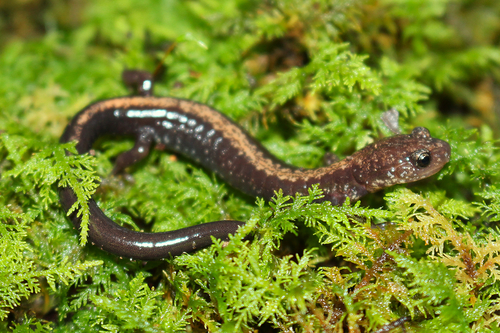
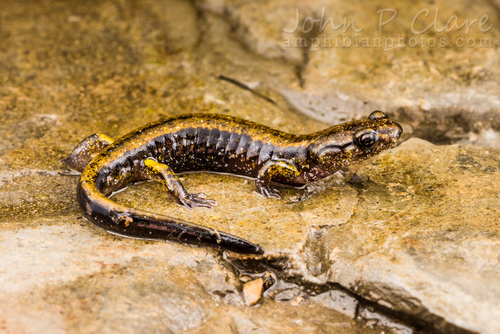
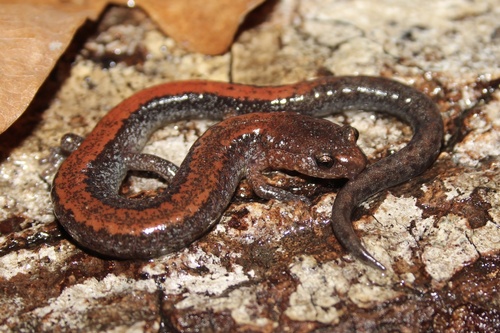
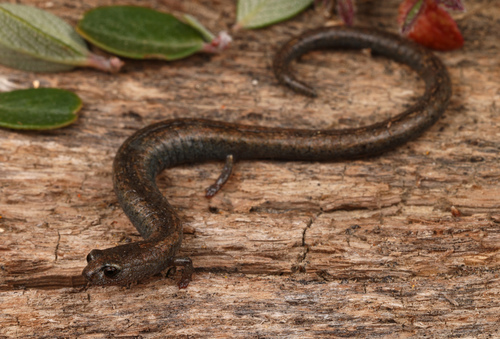
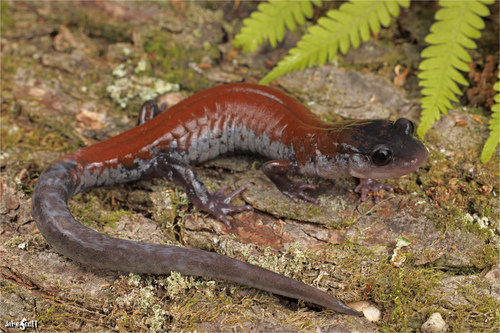
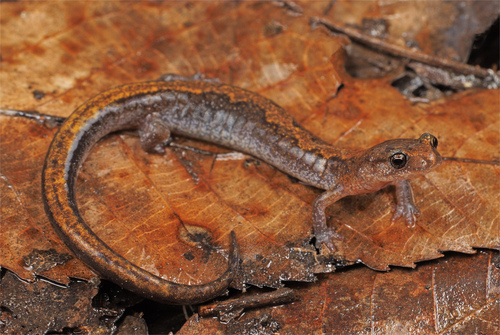
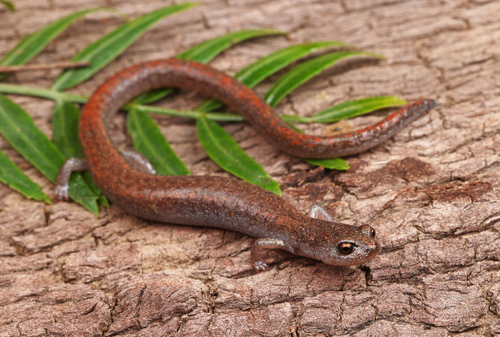
Batrachoseps major is a small salamander species, though it is larger than most other species of Batrachoseps slender salamanders. Adult individuals measure 3.2–5.9 centimetres (1.3–2.3 inches) in length, and have between 17 and 21 costal grooves. Like other members of the Batrachoseps genus, B. major has only four toes on its hind feet.
Coloration and Identification
Its body color is variable, but most individuals are some shade of gray. A key identifying feature of this species is its pale underside, which is the simplest way to distinguish B. major from the closely related B. nigriventris in areas where the two species live together. B. nigriventris is also typically much smaller and less robust than B. major.
Geographic Distribution
Batrachoseps major is endemic to a relatively small area of southern California (United States) and northwestern Baja California (Mexico), located within the California Floristic Province. Its range extends from the San Fernando Valley in the north, south to Ensenada, with records of occurrence as far south as El Rosario and the Sierra de San Pedro Mártir. It can also be found on Santa Catalina Island, the Coronado Islands, and the Todos Santos Islands, and it was likely introduced to these islands by humans. Despite having a small overall geographic range, B. major is generally abundant across the area it inhabits.
Lowland Habitat Preferences
This species primarily occurs in lowland habitats, though it can be found outside of these areas as well. In the northern part of its range in Los Angeles County, California, B. major is restricted to low-elevation valleys and basins, and does not extend any significant distance into the Transverse Ranges of the county—including the San Gabriel Mountains and Santa Monica Mountains, where B. nigriventris is found instead.
Elevation and Habitat Types
Further south, in the Peninsular Ranges areas where B. nigriventris does not occur, B. major occupies a much wider range of elevations, and is found throughout the Peninsular Ranges of San Diego County and northwestern Baja California. Its native habitats include coastal sage scrub, oak woodland, and conifer forests; it rarely occurs on the north-facing slopes of desert mountains in the Peninsular Ranges.
Urban Adaptation
B. major is one of the few native California amphibians that adapts reasonably well to urban development. It occurs across the heavily developed Los Angeles Basin, in yards and other similar non-native habitats that have sufficient moisture.
Co-occurrence with Related Species
In the northern portion of its range, B. major often co-occurs with B. nigriventris, and the two species can sometimes be found underneath cover side-by-side.