About Banksia formosa (R.Br.) A.R.Mast & K.R.Thiele
Growth Form
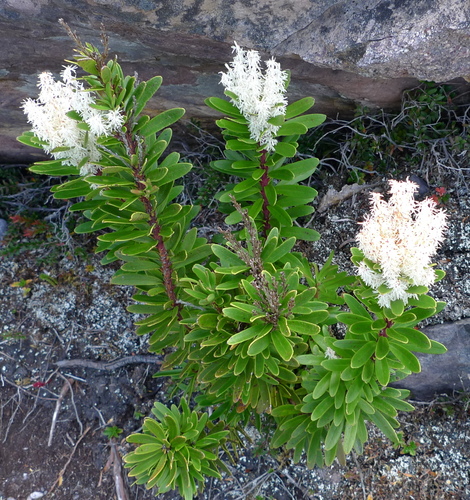
Banksia formosa is an erect shrub that typically reaches a height of 1 to 3 meters (3 feet 3 inches to 9 feet 10 inches), and it does not form a lignotuber.
Branchlet and Leaf Shape
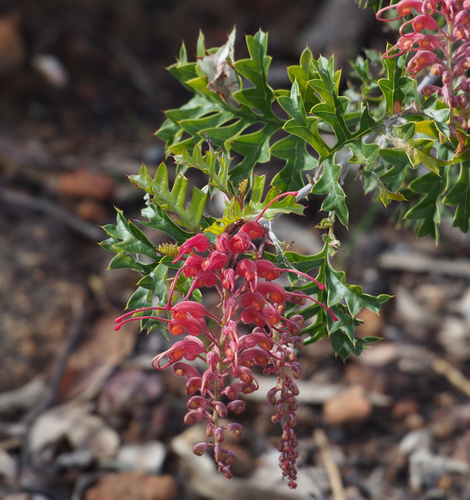
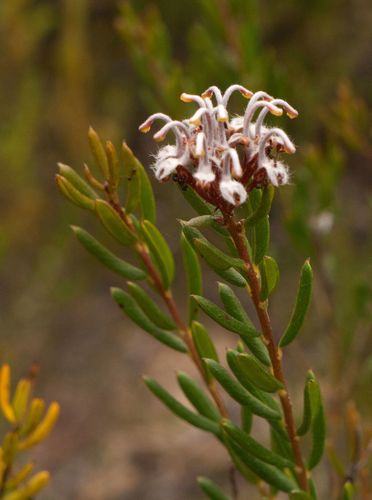
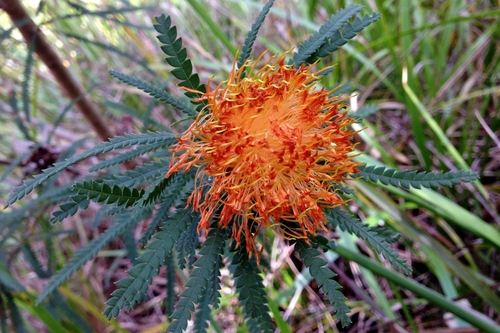
Its branchlets are covered in hair, and its leaves are broadly linear in outline, pinnatipartite.
Leaf Dimensions
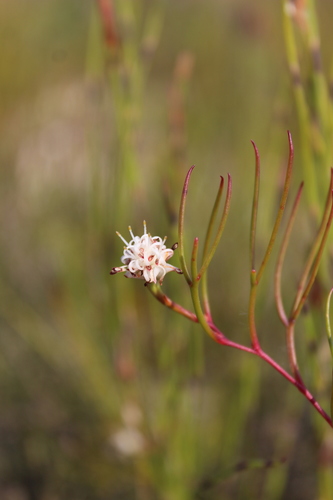
The leaves measure 70 to 160 millimeters (2.8 to 6.3 inches) long and 6 to 11 millimeters (0.24 to 0.43 inches) wide, and attach to a 2 to 3 millimeter (0.079 to 0.118 inch) long petiole.
Leaf Lobes
Each side of the leaf bears between 30 and 45 more or less triangular lobes.
Flower Head Arrangement
Flowers are arranged in heads that hold between 100 and 220 flowers each.
Involucral Bracts
Oblong to egg-shaped involucral bracts 16 to 20 millimeters (0.63 to 0.79 inches) long grow at the base of each flower head.
Flower Morphology
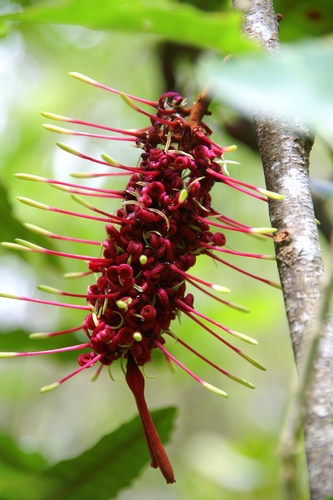
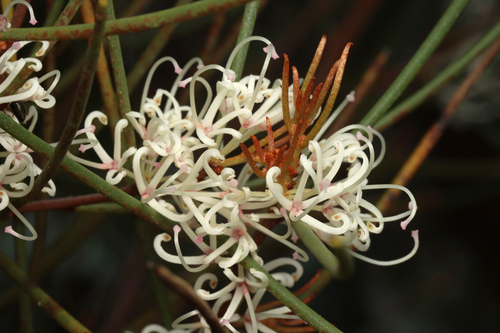
The flowers have a golden orange perianth 25 to 39 millimeters (0.98 to 1.54 inches) long, and a yellow pistil 29 to 55 millimeters (1.1 to 2.2 inches) long.
Flowering Period
Flowering occurs in May, or between September and December.
Fruit Characteristics
The fruit is a glabrous follicle 11 to 13 millimeters (0.43 to 0.51 inches) long, and each flower head can produce up to thirteen follicles.
Habitat and Distribution
This species grows in kwongan and open forest in the area between Busselton and Two Peoples Bay Nature Reserve, and it is common near Albany and in the Stirling Range.
Climate Change Impact
An assessment of the potential impact of climate change on Banksia formosa found its range is likely to contract by between 50% and 80% by 2080, with the extent of contraction dependent on the severity of climate change.