About Austrelaps ramsayi (Krefft, 1864)
Size
Austrelaps ramsayi has an average total length of 130 cm (51 inches), including the tail.
Dorsal Coloration
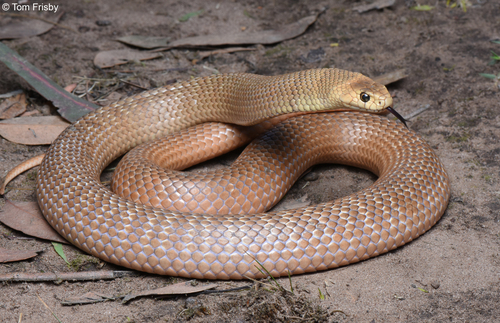
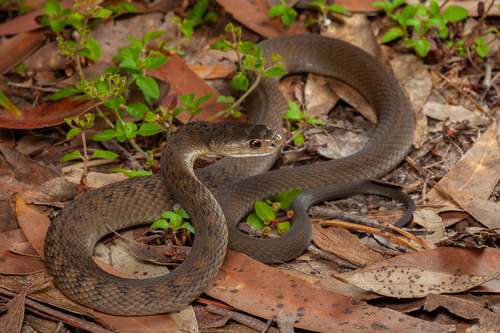
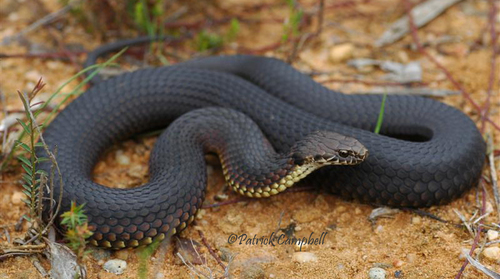
Its body color is variable: the upper surface can range from pale to dark grey, through reddish-brown or chocolate brown, to almost black, and always has a low gloss or matt sheen.
Lateral Scale Features
Noticeably enlarged lateral scales may be cream, yellow, or reddish-brown, with yellow paraventral scales typically bordered above by reddish-brown.
Labial Scale Markings
The supralabial (upper lip) scales are strongly barred; the pale, triangular lower front corner of each labial scale contrasts sharply with the dark brown remainder of the scale.
Ventral Coloration
The belly ranges from cream to pale yellow, and is sometimes leaden-colored.
Common Name and Distribution
This species, commonly called the highlands copperhead, inhabits Alpine regions of eastern Australia, and is common in the Southern Highlands of New South Wales, including Mittagong, Bowral, and Moss Vale.
Habitat Preferences
It can be found in montane heath, woodland, sclerophyll forests, along water bodies, and in swampy areas with thick clumps of tussock grass.
Austrelaps ramsayi is ovoviviparous
Reproductive Mechanism
females give birth to live young, with embryos developing inside eggs that are retained inside the mother’s body.
Brood Size
Brood sizes range from 9 to 31 offspring per litter.
Reproductive Advantage
This reproductive strategy gives extra protection to developing young until they are ready to be born.