About Atriplex hortensis L.
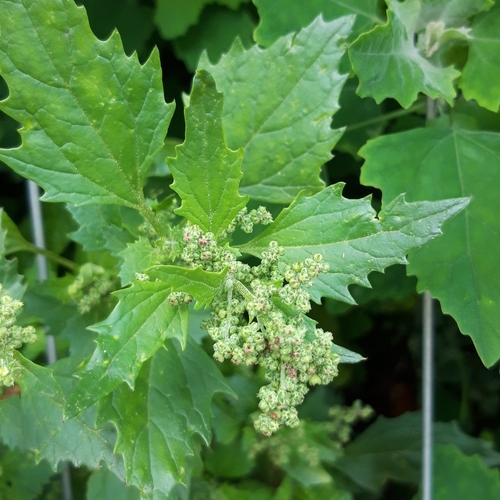
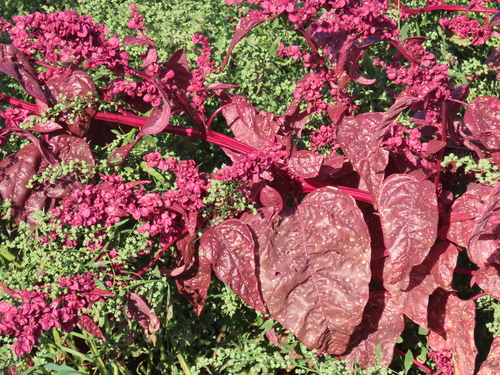
Atriplex hortensis L. is a hardy annual plant with an erect, branching stem. Its height ranges from 2 to 6 feet, depending on variety and growing conditions in soil. The plant's leaves vary in shape, but are generally somewhat oblong, relatively thin, and have a slightly acidic taste. There are cultivated varieties with red, white, and green foliage. Its flowers are small and inconspicuous, and are greenish or reddish, matching the general color of the plant's leaves. Individual flowers can be male, female, or hermaphrodite. The plant's fruits often hang over due to their weight. Seeds of this species retain viability for three years. Yellow-brown seeds are 3 to 4 millimeters in diameter, have a more translucent seed coat, and are able to germinate immediately. Black seeds are only 1.5 to 2 millimeters in diameter, have a smooth, thick, leathery seed coat, and only germinate after two years. Pollination occurs via self-pollination, wind pollination, or insect pollination. Atriplex hortensis has a salty, spinach-like flavor. Its leaves can be eaten cooked, or used raw in salads. Green leaves of the plant were historically used to color pasta in Italy. A common use for the plant is to balance the acidic flavor of sorrel. It was commonly grown in Mediterranean regions from early periods of history, until spinach became the more preferred leaf vegetable. It is often grown today as a warm-weather alternative to spinach, because it is more tolerant of heat and bolts more slowly in warm conditions.