About Atriplex canescens (Pursh) Nutt.
Common Name and Form Variability
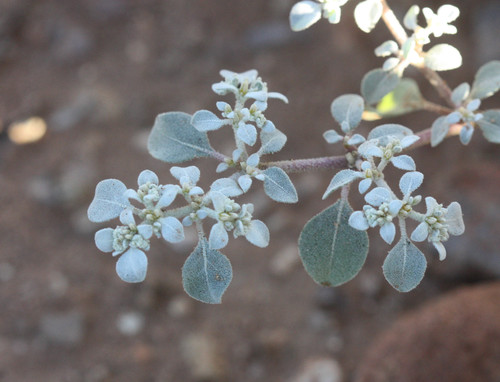
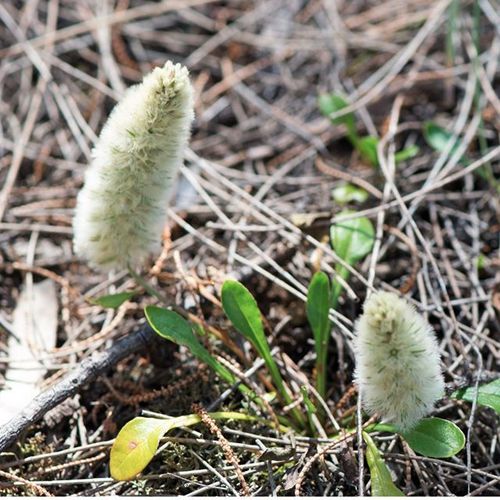
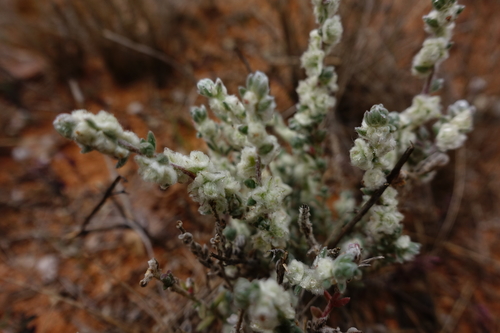
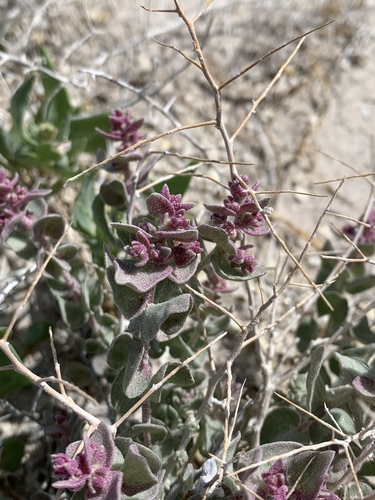
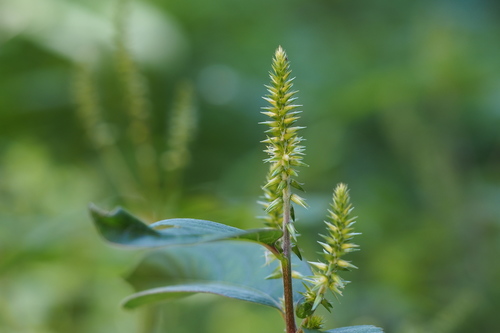
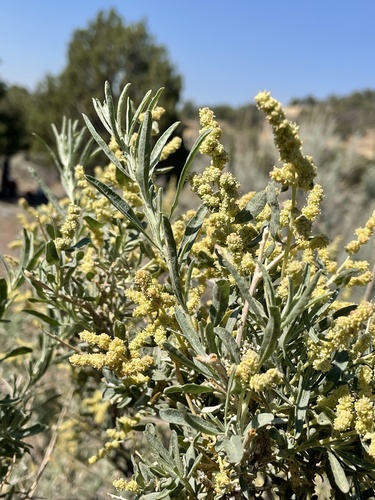
Atriplex canescens, also known as fourwing saltbush, has a highly variable form. It readily hybridizes with several other species in the Atriplex genus, and variation in polyploidy also contributes to differences in form.
Height
The plant's height ranges from 1 foot to 10 feet, though most individuals grow 2 to 4 feet tall.
Leaf Characteristics
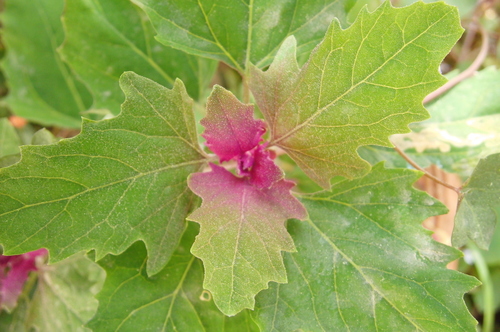
Its leaves are thin and measure 0.5 to 2 inches long.
Distinctive Fruit Features
The most distinctive identifying feature of this species is its fruits, which have four wings arranged at roughly 90 degree angles and are densely packed along long stems.
Bloom Period
Atriplex canescens blooms between April and October.
Early Succession Habitat
Fourwing saltbush is most commonly found in early succession habitats, including disturbed sites and active sand dunes.
Mature Succession Habitat
It also occurs in more mature successional communities dominated by sagebrush (Artemisia tridentata) and shadscale.
Zuni Medicinal Use
Among the Zuni people, an infusion of dried root and blossoms, or a poultice made of blossoms, is used to treat ant bites.
Zuni Hunting Ritual Use
Zuni people also attach twigs of this plant to prayer plumes and sacrifice them to cottontail rabbits to ensure a successful hunt.
Hopi Nixtamalization Use
The Hopi Native American people preferred using ashes of four-wing saltbush for nixtamalization of maize, the first step in making tortillas and pinole that removes the corn pericarp before parching and grinding. Four-wing saltbush ashes were often used in this process in place of slaked lime.
Archaeological Marker Use
Archaeologists frequently use four-wing saltbush as a marker to locate ancient Pueblo ruins, a pattern that suggests small branches of this bush were burned for their alkaline ashes to process maize by Native peoples across the Southwestern United States.