About Tidestromia lanuginosa (Nutt.) Standl.
Growth Form
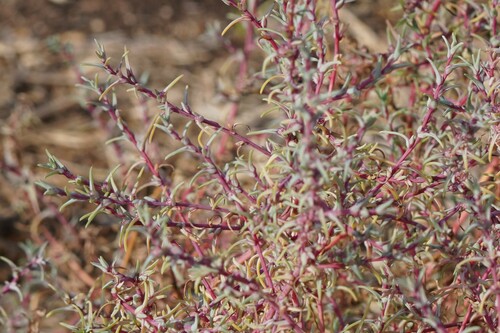
This species, an annual herb, grows sprawling stems that can be red, yellow, or greenish. These stems reach up to 50 centimeters long, and may occasionally grow longer, forming ground-level clumps or patches.
Leaf Shape
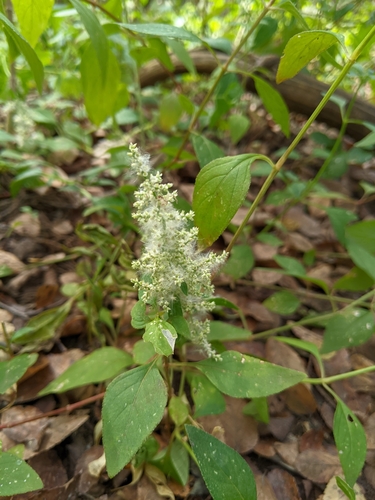
Its leaves vary widely in shape, ranging from rounded to lance-shaped, and are sometimes asymmetrical.
Leaf Coloration
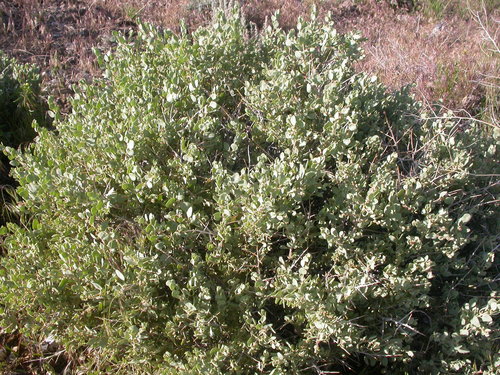
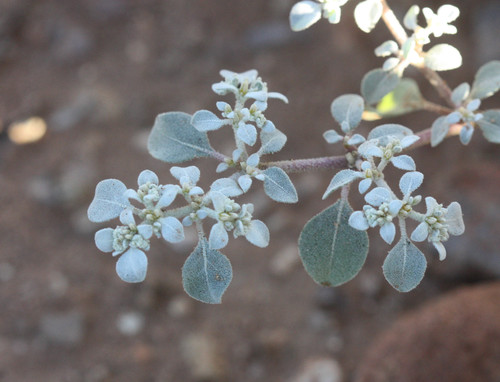
Leaves are gray-green, colored by a thin to dense layer of hairs. Hairs on the upper leaf surface gradually wear away, exposing the green tissue beneath.
Stem Pubescence
Stems are red and also covered in white hairs.
Flower Arrangement
Flowers grow in leaf axils, either solitary or in small clusters.
Flower Structure
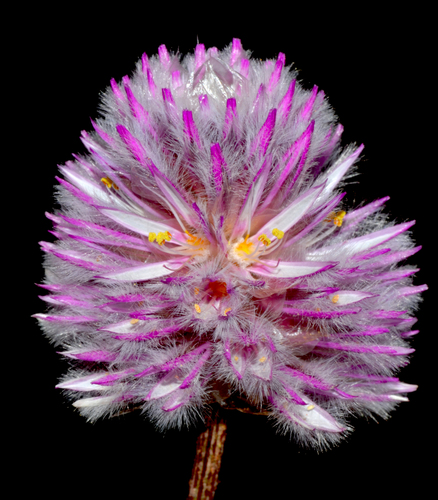
The flowers have no petals, and instead have tiny sepals surrounding a ring of five stamens.
Bloom Period
This plant blooms between July and October.
Native Range
Tidestromia lanuginosa is native to western and central United States (including Arizona, California, Colorado, Illinois, Kansas, Louisiana, Missouri, New Mexico, Oklahoma, Texas, and Utah), northern Mexico (including Baja California, Chihuahua, Coahuila, Durango, Nuevo León, San Luis Potosí, Sinaloa, Sonora, Tamaulipas, and Zacatecas), and the Dominican Republic.
Habitat Types
It grows across a wide variety of habitats, including riparian forests, pinyon–juniper woodland, desert scrub, grasslands, coastal dunes, beaches, roadsides, and fields.