About Arisaema serratum var. serratum
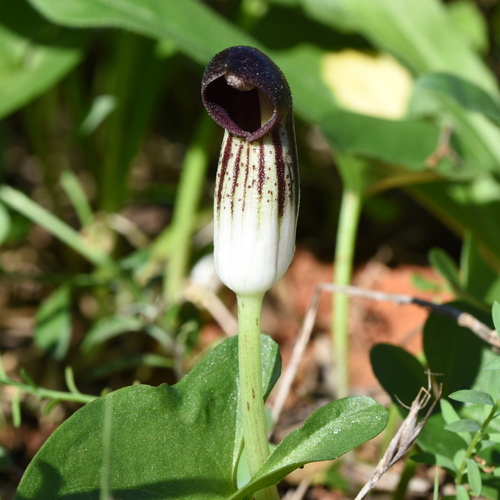
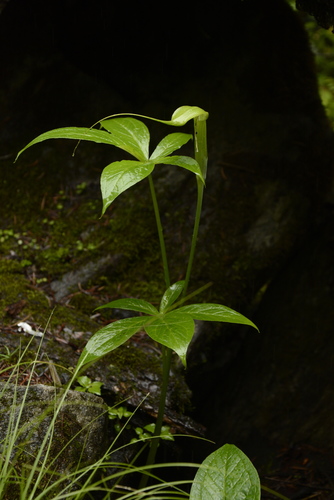
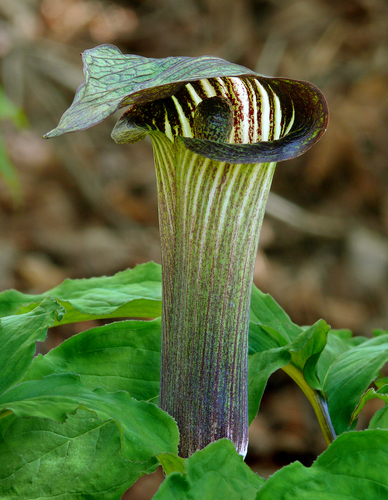
Arisaema serratum var. serratum is a variety of Arisaema serratum, a perennial flowering plant in the arum family Araceae. This plant is native to Japan, where it occurs from the Kansai region north to the island of Hokkaido. Its natural habitat is damp forests. It produces two leaves, each bearing 7 to 13 leaflets. The color of its flowering bract is variable, ranging from purple to green, and it blooms between May and June. It is closely similar to Arisaema mayebarae, a species restricted to Kyushu, where Arisaema serratum does not grow. The two can be distinguished by the shape and orientation of the spathe blade: Arisaema serratum has a shorter spathe blade that declines over the tip of the mouth, while Arisaema mayebarae holds its spathe blade at a horizontal angle. All parts of Arisaema serratum contain needle-like calcium oxalate crystals, saponins, and coniine. Toxic compounds are especially concentrated in the underground bulb. Touching the plant's juice causes skin inflammation. If ingested, the plant causes intense pain from the mouth through the throat, which makes swallowing impossible. Additional symptoms of poisoning include diarrhea, vomiting, and respiratory paralysis, and severe cases of poisoning can be fatal.