About Alocasia brisbanensis (F.M.Bailey) Domin
Leaf Petiole Characteristics
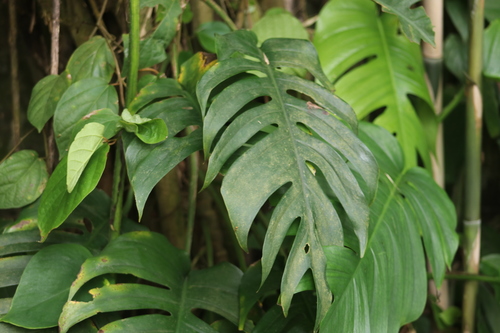
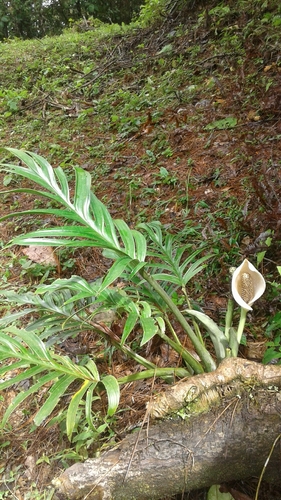
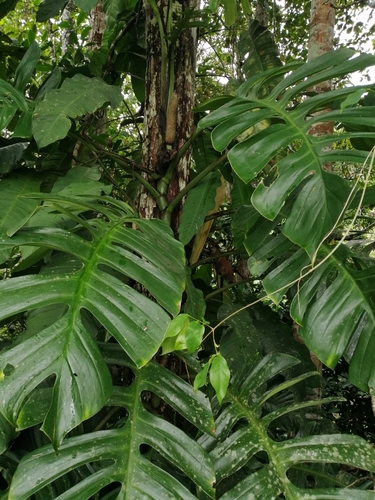
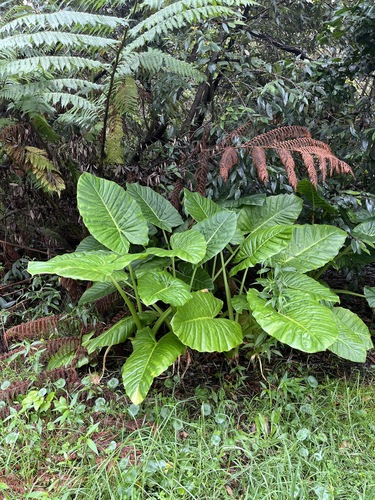
Alocasia brisbanensis produces very large, spade-shaped veined leaves attached to long, fleshy petioles, which range in color from purplish brown to green and grow 1.1 m (3 ft 7 in) long.
Mature Plant Height
Mature plants reach a total height of 1.5 m (4 ft 11 in) to 1.8 m (5 ft 11 in).
Leaf Size and Shape
Individual leaves are sagittate to ovate-sagittate, measuring roughly 70 cm (28 in) long and 60 cm (24 in) wide.
Leaf Surface and Lobe Features
They are glossy green, hairless, with backside lobes that have acute to rectangular, slightly rounded tips.
Leaf Veinlet Markings
Elongated 'oil dots' are visible along the leaf veinlets.
Growth Cycle Synchronization
New shoots grow at the same time as inflorescences develop, with no rest period between growth cycles.
Stem Characteristics
The stem is prostrate to erect, 13 cm (5.1 in) in diameter, and covered in the brown dried remains of old leaf bases.
Natural Habitat Type
This species grows on the margins of tropical, subtropical, and warm temperate rainforests at low altitudes, where it occurs as an understory herb in moist, shaded or partially shaded areas including creeks and wetlands.
Preferred Soil and Forest Associations
It grows well in pleiotrophic soils along creek lines and moist forest floors, such as Coastal Swamp Oak Forests.
New South Wales Distribution
In New South Wales, it occurs mainly in coastal and disturbed areas, distributed north of the Illawarra district and extending inland to Dorrigo and the upper Clarence River.
Altitude Range
It grows at altitudes from near sea level up to 1,000 m (3,300 ft).
Cultivation Uses
It is cultivated as both a houseplant and garden plant, valued primarily for its large, exotic-looking leaves and scented flowers.
Indoor Light Requirements
When grown indoors, it thrives in bright sunlight, though afternoon sun can bleach its foliage.
Outdoor Light Requirements
In outdoor gardens, it grows best in partial shade.
Climate and Humidity Needs
As a tropical species, it can be sensitive to cold and dry conditions, and requires high humidity to grow well.
Winter Dormancy
It enters a dormancy period during winter.
Fertilization Recommendation
It benefits from fertilization during the active growing season.
Common Pests
Common pests that affect this plant include mealybugs, spider mites, and aphids.