About Arisaema consanguineum Schott
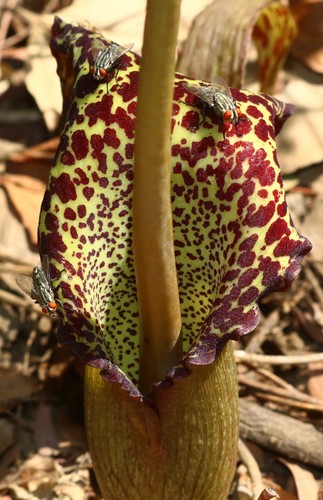
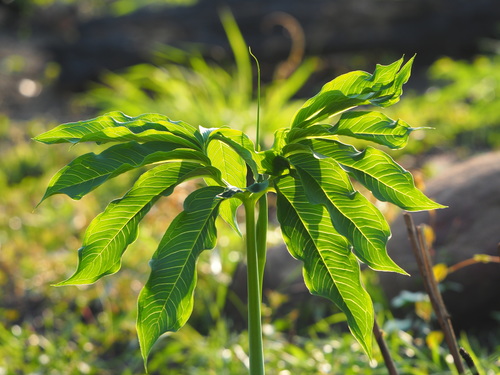
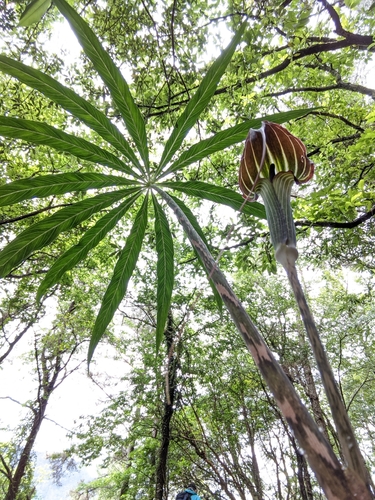
Arisaema consanguineum, commonly called the Himalayan cobra lily, is a flowering plant species belonging to the arum lily family Araceae. This is a tuberous perennial plant native to the Himalayas, Indochina, and China. It produces a single stem that grows up to 1 m (3.3 ft) tall, which holds one deciduous leaf made up of multiple radial leaflets. Its flower is a deep maroon hooded spathe marked with green and white stripes. The flower emerges in summer, and after blooming, it develops a cluster of bright red berries in autumn. This species is cultivated as an ornamental plant, and grows best in permanently damp, sunny or partially shaded, sheltered locations such as woodland gardens. While it is hardy down to −5 °C (23 °F), its tubers may need protection over the winter months. Handling this plant is reported to cause skin irritation, and ingestion leads to indigestion. Its confirmed distribution includes China, Taiwan, India, Myanmar, Bhutan, Nepal, and Thailand.