About Aquilegia formosa Fisch. ex DC.
Species Identity and Size
Aquilegia formosa, also known as crimson columbine, is a perennial herb that reaches 20–80 cm in height, with an average height of around 60 cm.
Bloom Period
It blooms from April to August, though this timing varies slightly across regions.
Overall Flower Characteristics
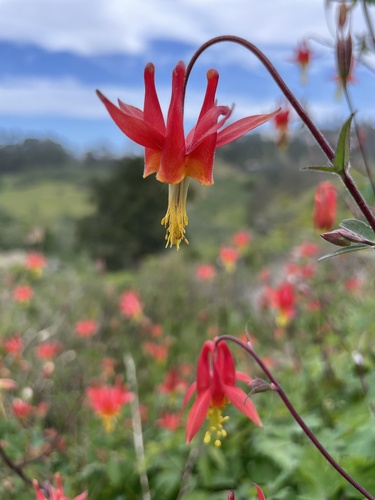
Its flowers are approximately 5 cm long, and are colored red and yellow overall.
Sepal and Petal Pigmentation
The sepals and petal spurs are typically reddish-orange, colored by the anthocyanin pigments pelargonidin and cyanidin, plus carotenoids. The yellow petal blades get their color from carotenoids.
Pollinators
Hummingbirds are the primary pollinators of this species, though bees, butterflies, and flies also visit its flowers.
Hybridization Details
Even though this species has multiple floral adaptations suited for hummingbird pollination, it forms hybrid zones with Aquilegia pubescens (a species primarily pollinated by hawk moths) at elevations of roughly 9,000 to 10,000 feet in the eastern drainages of California’s central Sierra Nevada mountains.
Edibility and Toxicity
The flowers of Aquilegia formosa are edible and have a sweet flavor, but eating its seeds can be fatal, and most parts of the plant contain cyanogenic glycosides.
Native Habitat Types
Within its native range, crimson columbine grows in most habitat types, including chaparral, oak woodland, mixed-evergreen forest, and coniferous forest.
Habitat Exclusions
It does not grow on desert floors, at altitudes above 3300 metres, or in California’s Central Valley.
Preferred Moisture Conditions
It prefers moist sites such as stream banks.
Traditional Human Uses
Some Plateau Indian tribes used Aquilegia formosa to make perfume, and multiple Native American tribes also use it for medicinal purposes.