About Aquilaria sinensis (Lour.) Spreng
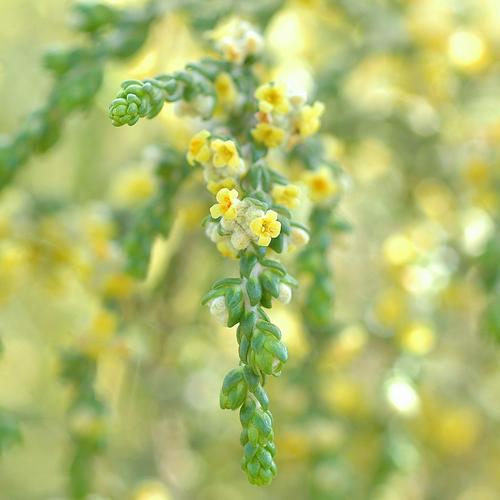
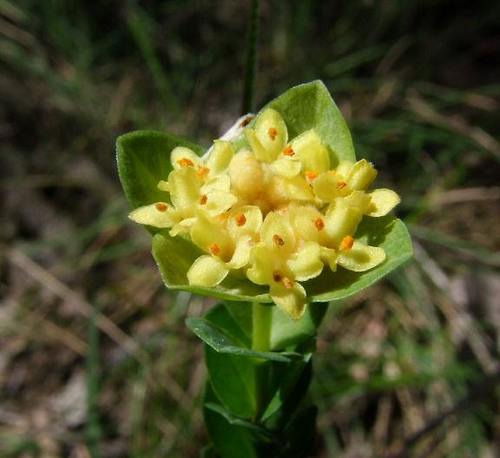
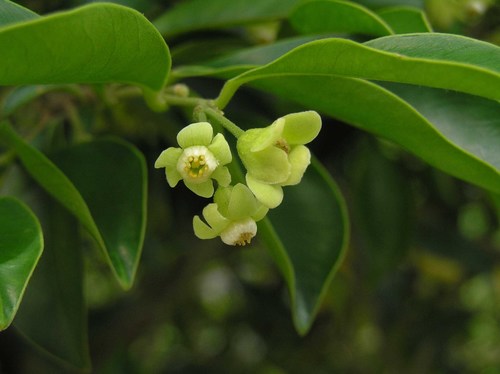
Aquilaria sinensis (Lour.) Spreng is an evergreen tree that grows 6 to 20 meters tall. It has smooth grayish to dark grey bark, and white to yellowish wood, which gives it the alternate Chinese name "Pak Muk Heung", meaning White Wood Incense. Young branchlets are sparsely covered with hairs. Its leaves are alternate, leathery, and obovate to elliptic, usually 5 to 11 cm (2.0 to 4.3 in) long and 2 to 4 cm (0.79 to 1.57 in) wide. The leaves have 15 to 20 pairs of inconspicuous, nearly parallel lateral veins, a useful diagnostic feature for field identification. Each leaf has a short acuminate apex, a broadly cuneate base, and entire, smooth margins. Its flowers are yellowish green, fragrant, and arranged in terminal or axillary umbels. The fruit is a woody obovoid capsule covered in short grey hairs, 2.5 to 3 cm (0.98 to 1.18 in) long. When ripe, it splits open into two flat valves, and a silky thread from the fruit base holds the one or two seeds in place. Aquilaria sinensis is endemic to Southeast China, including Hainan, and occurs as an introduced species in Vietnam. It is currently threatened by habitat loss. This tree produces agarwood, a valuable fragrant wood used in incense and medicine. Historically, its wood was used to make joss sticks and incense, but this industry has died out in Hong Kong. The resin produced and accumulated in the wood is a valued Chinese medicine called "Chen Xiang" (沉香). Chinese medicinal literature notes that large quantities of resin can be extracted after natural fungal infection or external wounding up to 5 cm deep into the bark. To harvest resin sustainably, a 3 to 4 cm deep wound can be made in the bark, and resin is collected a few years later after it accumulates. Small amounts of resin can also be extracted from wood blocks by heating or burning, which melts the resin and makes it seep out of the wood. Trunk and branch sections that contain patches of fragrant, resinous wood are traded commercially under the name agarwood. The plant is thought to produce resin as a reaction to fungal infection or external wounding, and resin-impregnated fragrant wood is typically found in trees over 20 years old. Not all individuals become infected, so rising harvest pressure has led harvesters in some regions to fell trees indiscriminately to find infected wood. High quality Chen Xiang was traditionally sourced mostly from the related species Aquilaria malaccensis and imported into China from Asian tropical regions, but supplies of this quality product are now depleted. Resin from Aquilaria sinensis is used as a substitute for this product, so Aquilaria sinensis is now also threatened as a result. Aquilaria sinensis is a traditional medicinal plant of the Yi people. Its leaf extract has a laxative effect, caused by the chemical constituent genkwanin 5-O-beta-primeveroside. Studies in mice have found that this extract shows activity against pain and inflammation.