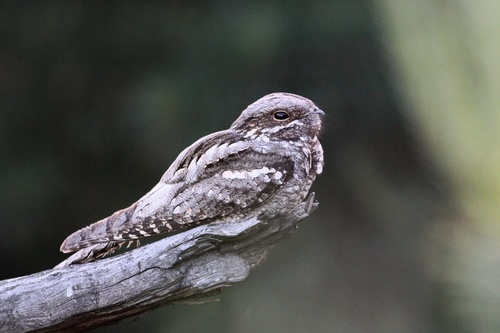
About Antrostomus badius Bangs & Peck, 1908
Taxonomy and Size
The Yucatan nightjar (Antrostomus badius Bangs & Peck, 1908) measures 24 to 25.5 cm (9.4 to 10 in) in length. One recorded male weighed 65.5 g (2.3 oz), and three recorded females weighed 51.2 to 64.3 g (1.8 to 2.3 oz).
Male Upperparts
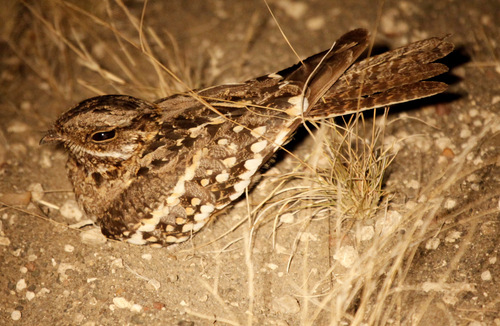
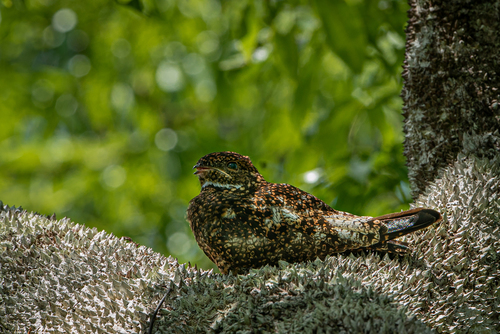
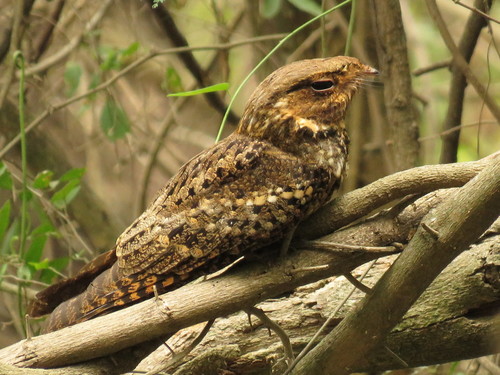
Males have grayish brown upperparts. The crown has blackish brown spots and grayish white speckles, while the back and rump have buff and cinnamon speckles alongside broad blackish brown streaks.
Male Neck and Collar
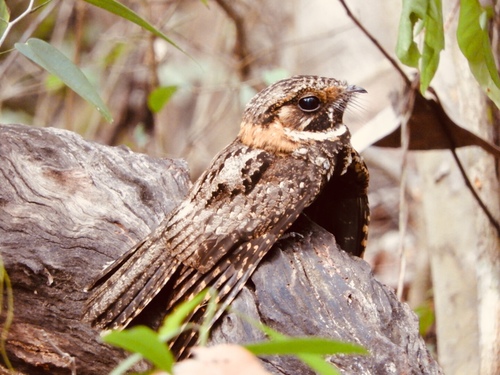
Males have a broad tawny or buff collar across the nape and the sides of the neck.
Male Tail
Their tail is brown with faint tawny bars; the three outermost pairs of tail feathers have wide white tips, and the innermost pair has grayish brown mottling on the tips.
Male Wings
Their wings are brown to grayish brown with tawny spots and bars.
Male Face and Throat
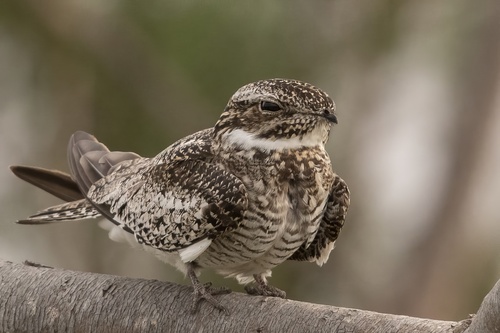
The face is tawny with blackish brown speckles. The chin and throat are dark brown with cinnamon bars, and a narrow white band sits below the throat.
Male Underparts
The breast is brown with buff and cinnamon speckles, and the belly and flanks are blackish brown with cinnamon speckles, brown bars, and many white spots.
Female Plumage Differences
Females are similar to males, but the pale tips of their outer tail feathers are much smaller, and they are buff rather than white.
Geographic Distribution
In terms of distribution and habitat, the Yucatan nightjar is a permanent resident on Mexico's Yucatán Peninsula and on Cozumel, which lies off the peninsula's coast. It is a nonbreeding visitor to Belize and northwestern Honduras, and there are a few recorded nonbreeding season sightings from northern Guatemala as well.
Habitat Preferences
It inhabits scrub, brushy woodland, and forest edge.