About Antechinus flavipes (Waterhouse, 1838)
General Fur Coloration
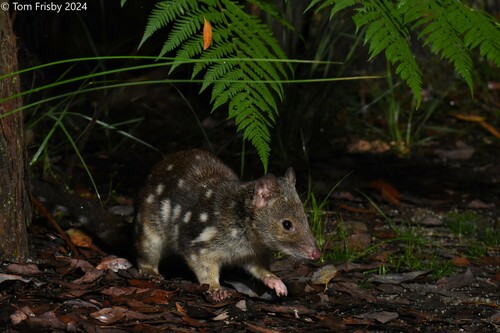
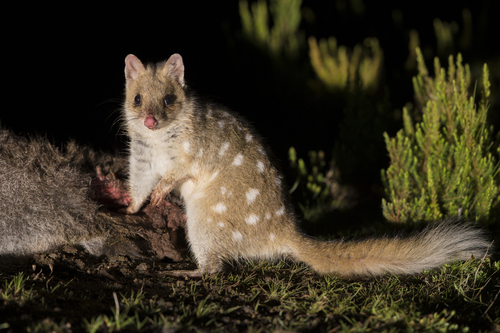
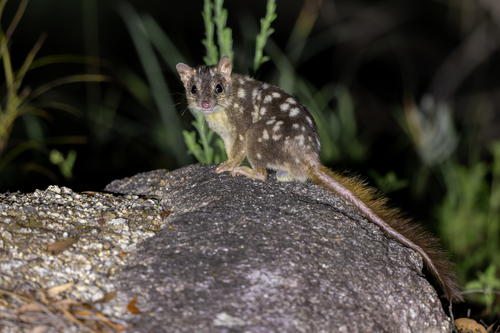
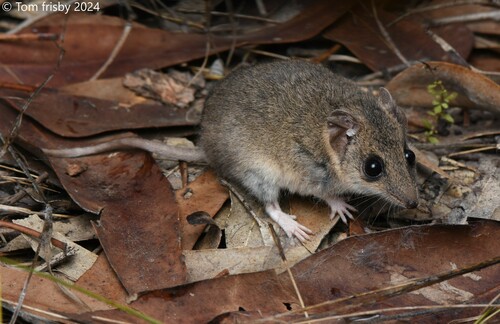
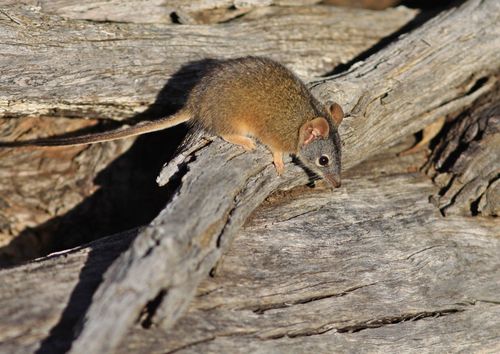
The yellow-footed antechinus (Antechinus flavipes) has geographically variable fur color, but is generally somewhat greyish. Notable features of the species include a white eye-ring and a black tail tip.
Body Fur Pattern
Its head and shoulders are always slate grey with a grizzled appearance, which grades into russet or yellowish fur; the chin and throat are pale, while the rump, flanks, belly, legs, and feet are darker. The subspecies A. flavipes rubeculus, found in northeastern Queensland, has deeper red fur than the southwestern Australian subspecies A. flavipes leucogaster.
Body Shape and Size
In size and body shape, this species is fairly typical of the Antechinus genus. Combined head and body length ranges from 90 to 160 millimetres (3.5 to 6.3 in), and body weight ranges from 20 to 75 grams (0.71 to 2.65 oz).
Teat Count Variation
The number of teats varies between individuals and subspecies: the nominate subspecies A. f. flavipes has 10 to 13 teats, while A. f. leucogaster has 8 to 10 teats. It has a pointed muzzle and short, broad feet that range in color from buff to yellow-brown, which gives the species its common name.
Fur and Tail Features
It has short fur and a moderately long tail. Unlike its close relatives, the yellow-footed antechinus is comparatively diurnal.
Mating Season Timing
Mating season lasts two weeks, with timing varying by location: August for southern populations, October for southern Queensland populations, and June–July for north Queensland populations. Its diet consists of invertebrates, eggs, and nectar, and sometimes includes small vertebrates.
Species Distribution
The yellow-footed antechinus has a discontinuous distribution that extends from the Mount Lofty Ranges in South Australia to Eungella in Queensland, excluding most of coastal New South Wales and Victoria. Isolated populations occur in northeastern Queensland and southwestern Western Australia.
Population Status
Some populations are described as "locally common", while the status of other populations is uncertain. This species occupies a variety of habitats, including dry arid scrubland and sclerophyll forest.
Habitat Variation by Range
In northern parts of its range, it also inhabits coastal heaths, swamps, and woodland; in the far north, it can be found in tropical vine forest. All members of the Antechinus genus are polyandrous and semelparous: all males die after the mating period, and most females die after weaning their offspring, though some females survive to produce a second brood the following year.
Torpor During Gestation
Female yellow-footed antechinus adjust their use of torpor over the ~28-day gestation period and in response to unfavorable environmental conditions, likely to support healthy development of their young. Before breeding, both males and females frequently use deep, long torpor; this use is reduced during the mating season.
Torpor Variation by Reproductive Stage
Pregnant females still use torpor, but their torpor bouts are significantly shallower and less frequent than before breeding. Females that are giving birth or lactating do not use torpor.
Reproductive Physiology
During these reproductive stages, body temperature and metabolic rate are tightly regulated, and can be aligned with the female's current reproductive stage.