About Anolis luciae Garman, 1887
Nomenclature
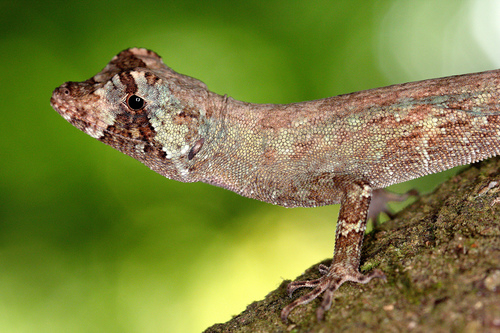
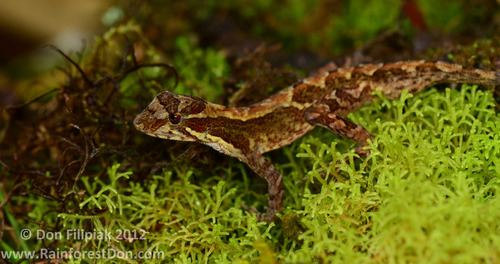
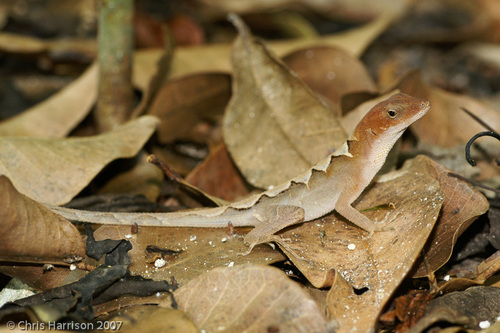
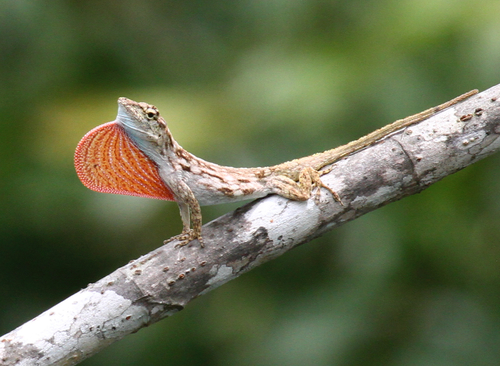
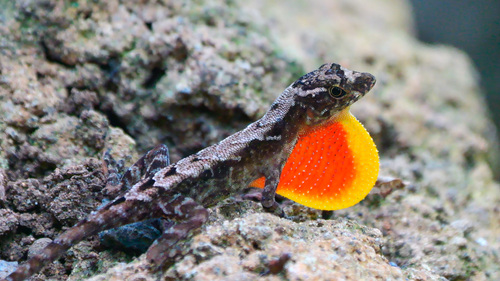
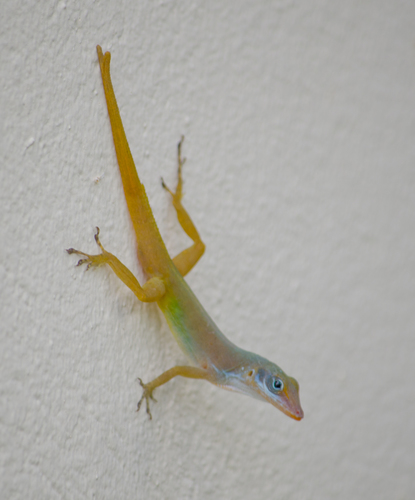
Anolis luciae Garman, 1887 has variable coloration and markings.
Dorsal Base Color Variation
Its dorsal base color shifts from brown in drier habitats to bright green in wetter areas.
Lateral and Ventral Coloration
Some populations have blue coloration along the sides, while its ventral surface may be white or yellowish.
Ocular Area Coloration
The area surrounding the eye can be white, blue, or green.
Male Dorsal Patterns
Males can be entirely patternless, or have reticulations or chevron-shaped patterns on the dorsal surface.
Female Coloration and Patterns
Females are duller in color than males, and may have a mid-dorsal stripe or dark chevron markings.
Distribution Range
Anolis luciae is widespread across Saint Lucia and its offshore islets.
Habitat and Altitude Range
Its preferred natural habitat is forest, found at altitudes ranging from sea level to 700 m (2,300 ft), and it also occurs in agricultural areas.
Reproduction Mode
Anolis luciae reproduces by laying eggs, meaning it is oviparous.