About Anolis lineatus Daudin, 1802
Taxonomic History
Anolis lineatus was first described by Daudin in 1802.
Size
Males of this species reach approximately 7–7.5 cm (2.8–3.0 in) in snout-to-vent length, while females reach around 6 cm (2.4 in).
Base Body Coloration
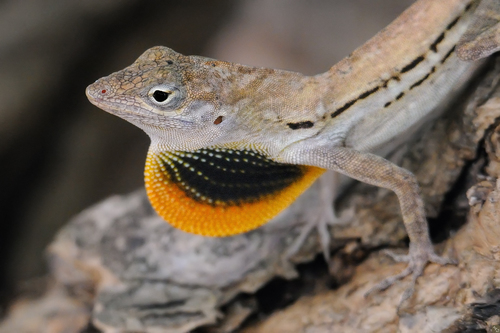
Its overall body colouration is light brownish.
Body and Tail Markings
Each side of the body has a pale lateral stripe edged in dark, and it typically bears several light bars across its body and tail.
Dewlap Base Appearance
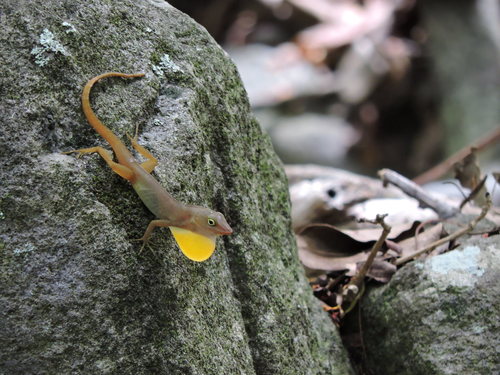
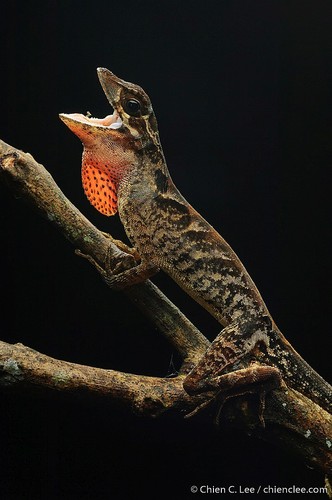
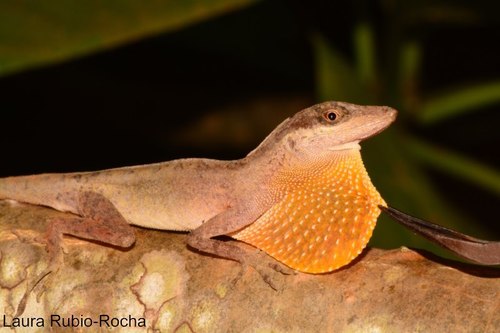
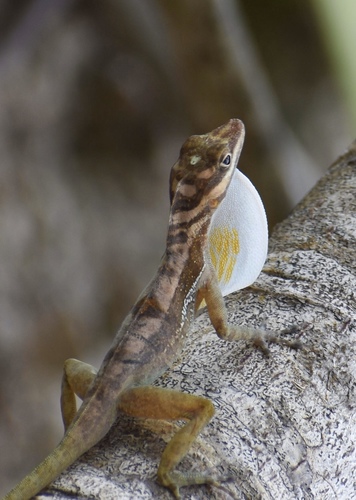
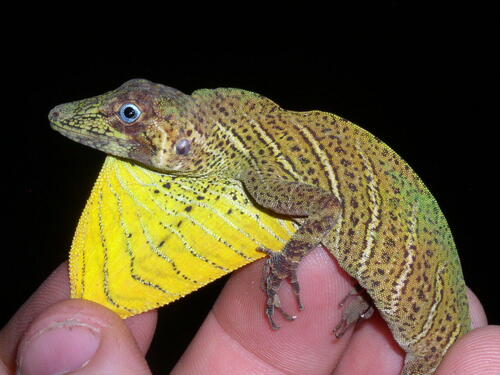
This anole has an orange-yellow dewlap marked with a blackish spot, and the dewlap is distinctly larger in males than in females.
Asymmetric Dewlap Coloration
It is the only known anole species with asymmetrically coloured dewlaps: one side of the dewlap is a deeper orange, while the other side is yellower.
Dewlap Color Asymmetry Direction
In almost three-quarters of all individuals, the left side of the dewlap is the most yellow.
Female Dewlap Asymmetry
Only a minority of females show an indistinct colour difference between the two sides of the dewlap.
Distribution Range
Anolis lineatus is distributed on the islands of Aruba and Curaçao, constituent island countries of the Kingdom of the Netherlands in the southern Caribbean Sea.
Habitat
It is commonly seen on rocks, building walls, and tree trunks, found at various heights but often staying relatively close to the ground.