About Anhinga rufa (Daudin, 1802)
Common Name and Classification
This species, Anhinga rufa, is commonly known as the African darter.
Size and Neck Morphology
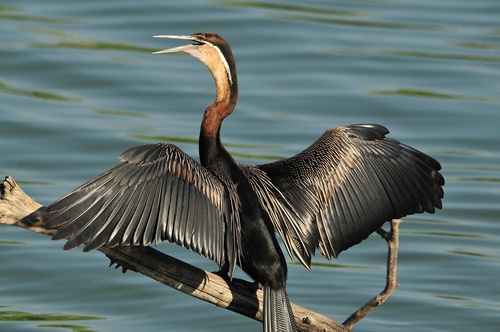
It reaches 80 cm (31 inches) in total length, and like all other anhingas, it has a very long neck.
Plumage Variation
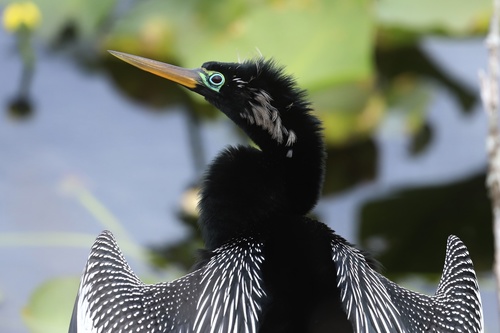
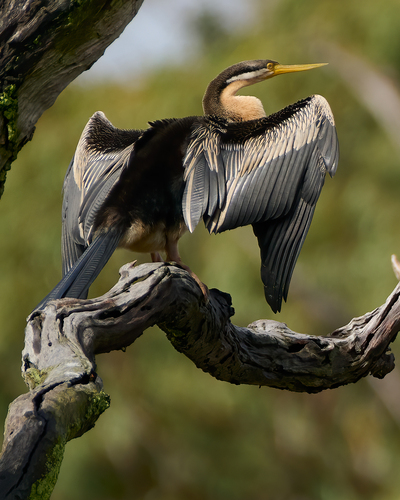
Breeding males are primarily glossy black with white streaking, while females and young immature individuals are a browner overall color.
Distinguishing Mark from American Darter
The most noticeable difference in appearance between the African darter and the American darter is the African darter's thin white lateral stripe along its neck, which sits against a rufous-colored background.
Distinguishing Bill Feature
The species' pointed bill distinguishes it from cormorants, which do not share this bill shape.
Main Distribution and Population Status
The African darter is distributed across all of sub-Saharan Africa in areas that contain large bodies of water, and the species as a whole remains widespread and common.
Non-African Subspecies Range
There is one non-African subspecies, the Levant darter (Anhinga rufa chantrei), which historically occurred at Lake Amik in south-central Turkey, in the lakes and marshes of the Hula Valley in northern Israel, and in the Mesopotamian Marshes along the lower Euphrates and Tigris rivers in southern Iraq.
Historical Subspecies Extirpations
The Turkish population of this subspecies died out in the 1930s, and the Israeli population was lost in the 1950s when the Hula marshes were drained.
Subspecies 1990 Population and Threats
In Iran's Khuzestan province, 110 individuals were counted in 1990, but the subspecies was feared extinct after oil spills during the Gulf War and the subsequent drainage of the Mesopotamian Marshes.
Subspecies Rediscovery
However, a small surviving population was recorded in the Hawizeh Marshes in 2007.
Post-War Ecosystem Restoration
After the Iraq War, the drainage of these marshes was halted and portions of the ecosystem were restored.