About Anemone trifolia L.
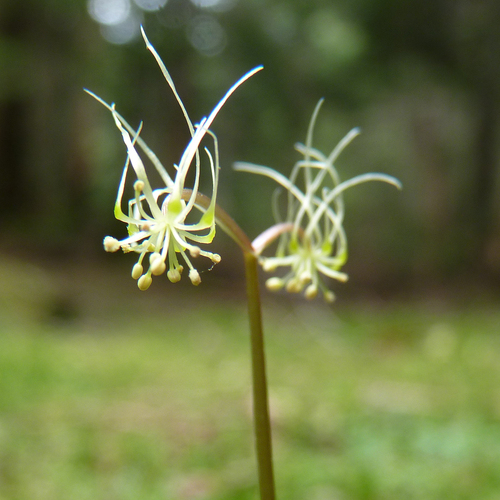
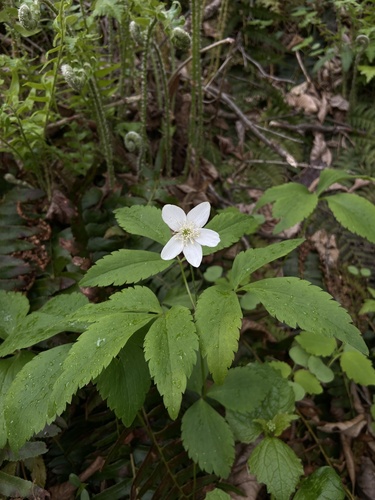
This species is currently known by the scientific name Anemone trifolia L., and is also referred to as Anemonoides trifolia. The plant grows stems 10–30 cm tall. Each stem bears a single flower, which is most commonly white, and rarely pale pink or pale bluish. Flowers measure 2 cm in diameter, with five to nine, most often six, elliptical tepals. The fruit is a cluster of achenes that are 2 mm long. In the subspecies Anemone trifolia subsp. albida, the achenes are pendulous. Its leaves are divided into three lanceolate leaflets, and form a single whorl of three leaves per stem; leaflets have a toothed, but not lobed, margin. The rhizome grows directly below the soil surface, is whitish, and typically forms dense clonal colonies. This species flowers from April through June. It differs from Anemonoides nemorosa in having white or pale blue anthers, unlike the yellow anthers of A. nemorosa, and simple lanceolate leaflets that do not have the deep lobing seen in A. nemorosa. It has a more restricted range than the closely related Anemonoides nemorosa, occurring across southern and central Europe, ranging from Portugal and Spain east to Hungary, and reaching locally as far north as Finland, where only one small population is found. It grows in hardwood forests and on rocky sites, at altitudes up to 1860 metres.