About Aconitum noveboracense A.Gray ex Coville
Taxonomic Classification
Aconitum noveboracense A.Gray ex Coville, commonly called northern monkshood, belongs to the Aconitum genus, a group of herbaceous perennial plants in the buttercup family Ranunculaceae.
Genus Toxicity
All plants in this genus contain highly toxic alkaloids, including the cardiotoxin and neurotoxin aconitine; a dose of just 1.5–6 mg of aconitine can be lethal to humans.
Leaf Morphology
Northern monkshood has spirally arranged leaves with no stipules, each leaf divides into 5 to 7 segments, and each of these segments has three toothed lobes.
Flower Characteristics
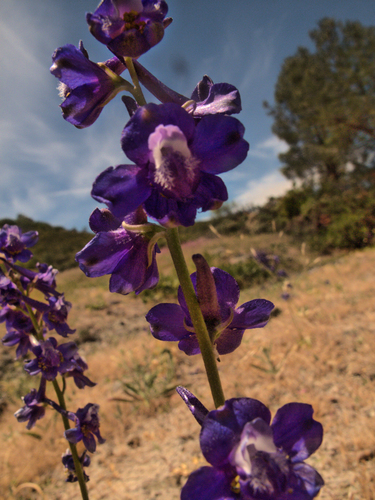
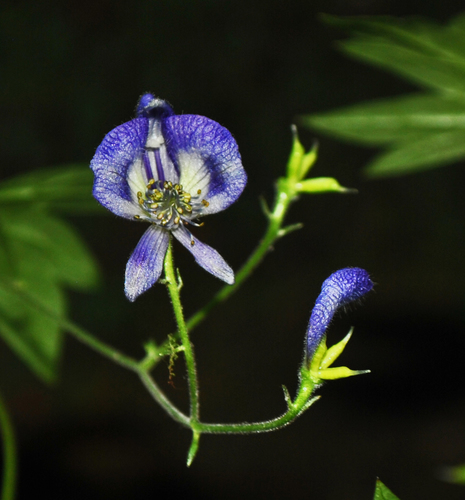
Its flowers are bisexual, bilaterally symmetric, and can be a range of colors, most commonly blue or purple, but sometimes pink, yellow, or white.
Common Name Origin
The upper sepal forms a distinctive helmet shape, and the two true petals are held inside this hooded structure; this unique appearance gives the group its common name "monkshood".
Taxonomic Relationship
Northern monkshood was long classified as a disjunct population of Aconitum columbianum because of their similar physical features, and genetic testing confirms that Aconitum noveboracense is genetically similar to Aconitum columbianum populations native to western North America.
Core Population Distribution
Most populations of northern monkshood are located in northeastern Ohio, and parts of the Driftless Area in northeast Iowa and southwest Wisconsin.
New York Population Size
There are only seven populations of the species in New York's Catskill Mountains.
Preferred Habitat Types
This species typically grows on shaded or partially shaded cliffs, algific talus slopes, or cool streamside sites.
Shared Habitat Traits
All these habitats have cool soil, cold air drainage, or cold groundwater flow.
Algific Talus Slope Cooling Mechanism
On algific talus slopes, these cool conditions come from cool air and water outflow from ice stored in underground fissures; these fissures connect to sinkholes and act as conduits for air movement.
Seedling Growth Requirements
Northern monkshood seedlings are very sensitive to environmental conditions, and grow best in soil with high moisture content.
Seedling Survivorship Factors
Adult plants are less sensitive to environmental changes than seedlings, and seedling survivorship drops when temperature or moisture content decreases.