About Andinobates fulguritus (Silverstone, 1975)
Size
Andinobates fulguritus (Silverstone, 1975) measures between 13.5–15 mm (0.53–0.59 in) in snout–vent length for males, and between 14–16.5 mm (0.55–0.65 in) for females.
Dorsal Coloration
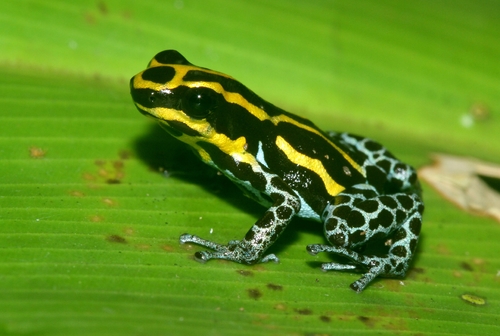
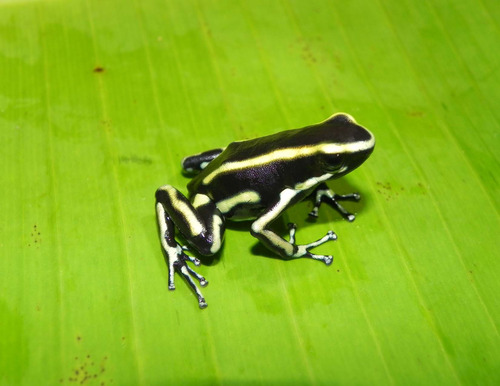
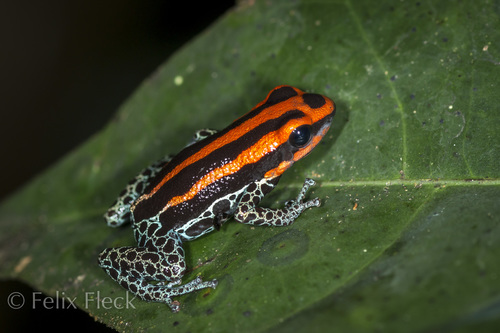
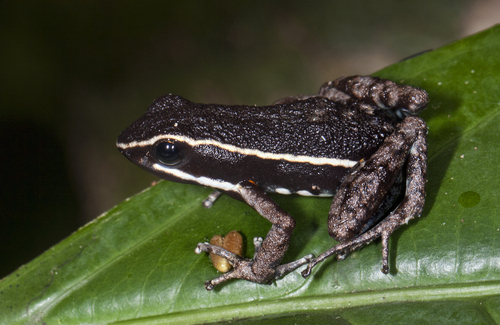
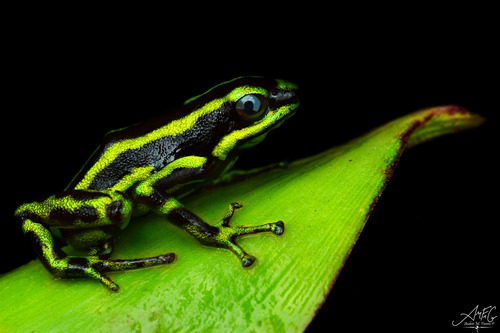
Its dorsum is black, marked with gold, yellow, or yellow-green dorso-lateral and lateral stripes; only the dorso-lateral stripes are complete. There is an incomplete median stripe on the anterior section of the dorsum.
Ventral Coloration
The venter is gold or yellow, with black marbling or spots.
Skin Texture
Dorsal skin is slightly granular, while ventral skin is moderately granular.
Tympanum Characteristics
The tympanum is round, with its postero-dorsal portion concealed.
Iris Color
The iris is black.
Limb Morphology
Neither fingers nor toes have fringes or webbing.
Natural Habitat
This species’ natural habitats are tropical moist lowland forests.
Elevation Range
In Colombia, it occurs at elevations ranging from 160–900 m (520–2,950 ft) above sea level; populations in Panama may occur at higher elevations.
Species Abundance
It is a locally common, terrestrial frog.
Conservation Status
The IUCN Red List classifies this species as Least Concern for extinction.
Threats
It faces threats from habitat loss, caused by deforestation for human settlement, logging, and illegal farming, as well as pollution from pesticide and fertilizer spraying on illegal crops. There is no evidence this species is collected for the pet trade.
Protected Range
Its range includes several protected areas, including but not limited to Parque Nacional Chagres and Area de Manejo Especial Nusagandi.
Reproduction Site Selection
For reproduction, the male identifies a suitable site for egg deposition and leads the female to this site.
Egg Laying Process
The male deposits sperm first, after which the female lays her eggs on top of the sperm. Eggs are deposited in leaf litter.
Egg Care
The male returns to check on the eggs periodically.
Tadpole Development
Once the eggs hatch, an adult frog carries the tadpoles to leaf axils, most commonly bromeliads, where the tadpoles finish their development with no additional parental care.