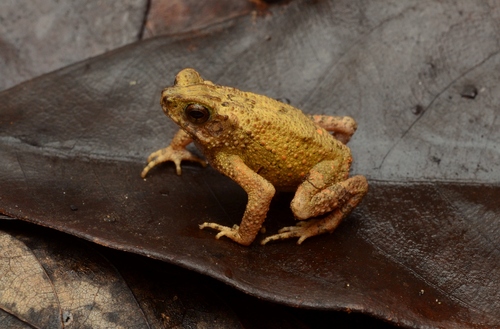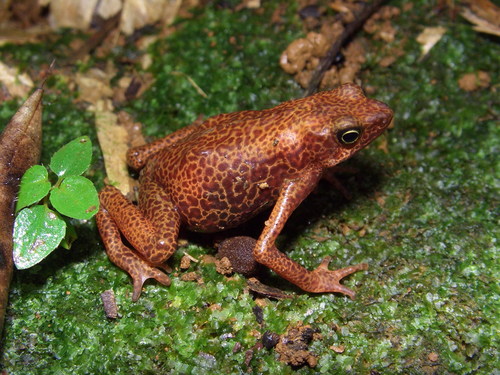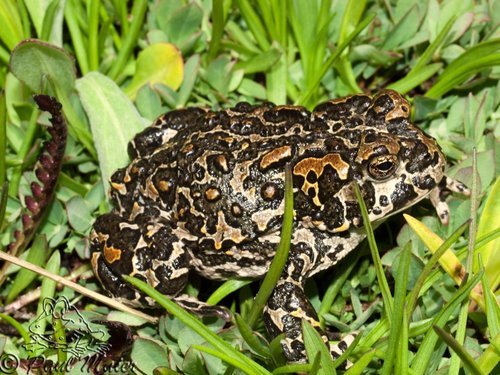
About Anaxyrus canorus (Camp, 1916)
Taxonomy and Naming
The Yosemite toad, scientifically named Anaxyrus canorus, formerly classified as Bufo canorus, is a true toad species belonging to the family Bufonidae.
Geographic Range
This species is endemic to California’s Sierra Nevada, with a range extending from Alpine County to Fresno County.
Elevation Range
Yosemite toads only occur in the montane to subalpine elevational zone, between 1,950–3,445 m (6,398–11,302 ft) above sea level.
Related Species and Adaptations
It resembles the closely related nearby western toad, Anaxyrus boreas, but has a range of adaptations suited to a high elevation lifestyle.
Taxonomic History
It was first described by Charles Camp, an undergraduate student of Joseph Grinnell, during the Grinnell Survey of California.
Breeding Habitat Types
Yosemite toads primarily use montane and subalpine wet meadows as breeding habitat, though they will occasionally breed in ephemeral ponds, lake margins, and other riparian areas.
Preferred Breeding Meadow Characteristics
The species tends to favor flatter, southwesterly meadows that receive more precipitation and hold warmer water.
Breeding Site Water Depth
Breeding specifically occurs in shallow snowmelt ponds or flooded areas, with eggs usually laid in water less than 5 cm deep.
Egg Freezing Risk
This shallow water puts eggs at risk of freezing, due to the very low nighttime temperatures during spring snow melt.
Egg Laying Behaviors
Female Yosemite toads sometimes split their egg clutches between multiple areas, or lay their clutches communally alongside other breeding pairs in a single spot.
Egg and Tadpole Pigment Function
Researchers think the relatively high amount of pigment in Yosemite toad eggs and tadpoles helps speed up development.
Daytime Tadpole Behavior
During the day, tadpoles gather in the shallowest, warmest margins of their ponds.
Nighttime Tadpole Behavior
At night, tadpoles settle into silty detritus, which insulates them from cold nighttime temperatures.
Breeding Pool Silt Texture
This behavior leaves small divots in the silt, often giving breeding pools a textured appearance described as resembling golf balls.
Breeding Pond Drying Tradeoff
Many breeding ponds dry out completely each season before tadpoles can complete metamorphosis, creating an apparent selective tradeoff: shallow ponds speed up tadpole development, while longer-lasting ponds support higher survival rates.
Metamorphosis Timeline
The period from hatching to full tadpole metamorphosis lasts 4–6 weeks, and this timeline is heavily influenced by environmental factors including elevation, weather, food availability and competition, and may also be affected by genetic background.
Tadpole Overwintering Ability
Tadpoles cannot survive overwintering.
Subadult and Adult Habitat Knowledge Gap
Habitat use patterns of subadult and adult Yosemite toads remain poorly understood.
Newly Metamorphosed Toad Habitat
Newly metamorphosed toads leave breeding ponds soon after transformation, and most likely overwinter nearby in stream channels and associated vegetation like willows, sedges, and grasses.
Juvenile Dispersal Patterns
Most juveniles at one year of age or older disperse further upland into adult foraging habitat by mid-summer of their second year, though some can still be found near breeding ponds.
Adult Foraging Habitat Characteristics
Adult upland foraging habitat is typically characterized by seeps and springs, willows, tall forbs, granitic boulders, or forest clearings at lower elevations.
Non-hibernation Shelter Sources
Rodent burrows provide essential shelter from predators and harsh weather, alongside willows, logs, and rocks.
Overwintering Site Types
For overwintering, Yosemite toads use rodent burrows built by species such as pocket gophers, voles, and Belding's ground squirrels, as well as tangled willow roots.
Overwintering Site Requirements
These sites maintain the optimal thermal and moist conditions hibernating toads need.