About Anadenanthera peregrina (L.) Speg.
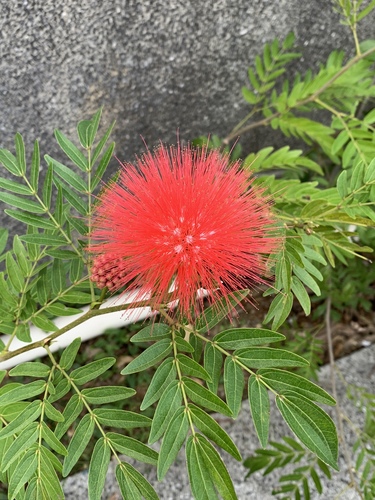
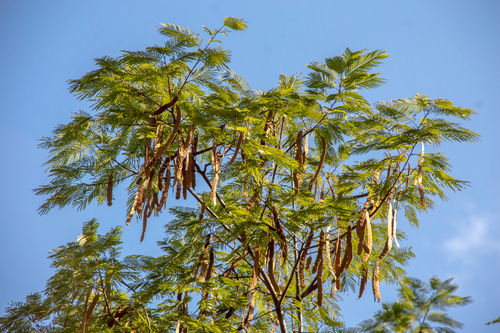
Anadenanthera peregrina (L.) Speg., commonly called yopo, jopo, cohoba, parica, or calcium tree, is a perennial tree in the genus Anadenanthera. It is native to the Caribbean and South America. This species grows up to 20 m (66 ft) tall, and has thorny bark. Its flowers form small, pale yellow to white spherical clusters that resemble the inflorescences of Acacia, such as wattle. It is an entheogen that has been used in healing ceremonies and rituals for thousands of years across northern South America and the Caribbean. While yopo tree seeds were originally collected from wild populations, growing competition between tribes for access to the seeds led to intentional cultivation of the species and its transport to new areas. Its beans (sometimes referred to as seeds) and falling leaves are hallucinogenic, and are toxic to cattle. Multiple South American tribes have been documented using various prepared forms of Anadenanthera peregrina beans alongside Banisteriopsis caapi, an herb that contains monoamine oxidase inhibitors (MAOIs). In this traditional use, Banisteriopsis caapi is typically chewed while the Anadenanthera beans are snuffed or smoked; occasionally, Banisteriopsis caapi is mixed directly into the snuff.