About Amorpha fruticosa L.
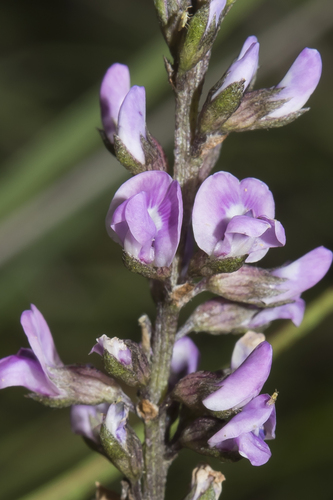
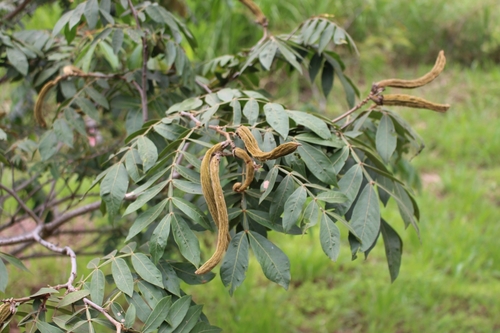
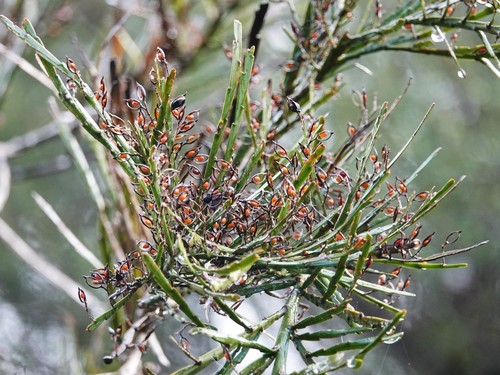
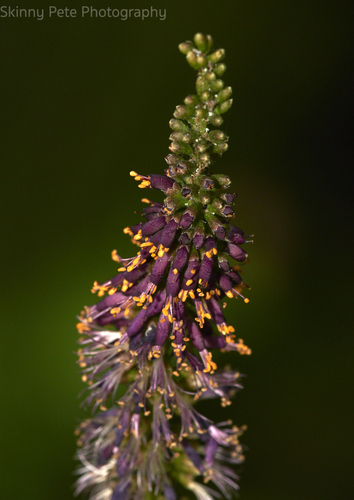
Amorpha fruticosa L. is a perennial shrub. It is a glandular, thornless shrub that can reach 5 to 6 meters (16 to 20 feet) in height, and can spread to twice that measurement in width. This species has somewhat variable morphology. Its leaves are composed of many hairy, oval-shaped leaflets with spine tips. The inflorescence is a spike-shaped raceme that holds many flowers; each flower has a single purple petal and ten protruding stamens with yellow anthers. Its fruit is a legume pod that contains one or two seeds. The native range of Amorpha fruticosa covers most of the United States and extends south into Mexico. Its native habitats include the edges of streams and ponds, open woods, roadsides, and canyons. This species has escaped cultivation in other areas outside its native range, and exists as an introduced species in Europe, Asia, and other continents. It is often cultivated as an ornamental plant, and some wild populations may be descended from plants that escaped from garden cultivation. It is considered invasive in Georgia. Ecologically, Amorpha fruticosa is a larval host plant for the clouded sulphur, gray hairstreak, hoary edge, Io moth, marine blue, silver-spotted skipper, and southern dogface. Its abundant seeds are a food source for bobwhite quail. Both bees and butterflies use its flowers as a source of nectar.