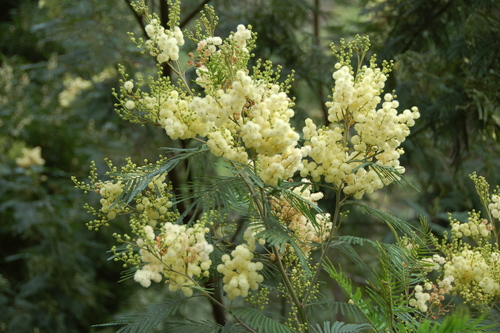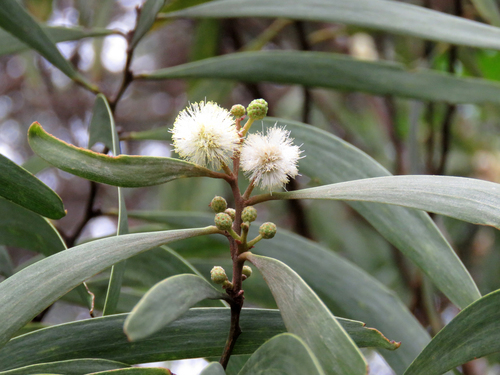
About Acacia koa A.Gray
Scientific Name
Acacia koa A.Gray
Description
Size and Growth Rate
Koa is a large tree, typically reaching 15–25 metres (49–82 feet) in height and 6–12 m (20–39 ft) in spread. When growing in deep volcanic ash, koa can reach up to 30 m (98 ft) in height, 6 m (20 ft) in trunk circumference, and 38 m (125 ft) in spread.
Growth Speed
It is one of the fastest-growing Hawaiian trees, and can reach 6–9 m (20–30 ft) in five years when grown on a favorable site.
Habitat
Geographic Range and Elevation
Koa is endemic to the Hawaiian islands of Hawaiʻi, Molokaʻi, Maui, Lānaʻi, Oʻahu, and Kauaʻi, where it grows at elevations ranging from 100–2,300 m (330–7,550 ft).
Rainfall and Soil Requirements
It requires 850–5,000 mm (33–197 in) of annual rainfall. It prefers acidic to neutral soils with a pH of 4–7.4, which are either Inceptisols derived from volcanic ash or well-drained histosols.
Forest Dominance
Its ability to fix nitrogen allows it to grow in very young volcanic soils. Koa and ʻōhiʻa lehua (Metrosideros polymorpha) dominate the canopy of Hawaiian mixed mesic forests, and koa is also common in Hawaiian wet forests.
Ecology
Fauna Interactions
Koa is the preferred host plant for caterpillars of the green Hawaiian blue (Udara blackburni), which feed on its flowers and fruits. Adult green Hawaiian blue butterflies drink nectar from koa flowers.
Additional Fauna Associations
Adult Kamehameha butterflies (Vanessa tameamea) feed on koa sap. The koa bug (Coleotichus blackburniae) uses its rostrum to extract contents from koa seeds.
Disease Vulnerability
Koa is vulnerable to infection by koa wilt.
Uses
Traditional Cultural Uses
Ancient Hawaiians used koa trunks to construct waʻa (dugout outrigger canoes) and papa heʻe nalu (surfboards). Koa was only used to make paipo (bodyboards), kikoʻo, and alaia surfboards; the longest surfboards, called olo, were made from the lighter, more buoyant wiliwili (Erythrina sandwicensis).
Wood Properties and Crafts
Koa's reddish wood is very similar to black walnut (Juglans nigra) in strength and weight, with a specific gravity of 0.55, and is currently sought after for wood carving and furniture production.
Musical Instrument Applications
Koa is also used as a tonewood, frequently used to build ukuleles, acoustic guitars, and Weissenborn-style Hawaiian steel guitars. B.C. Rich has used koa for some of its electric guitars, and still uses koa-veneered topwood for certain models.
Guitar Brand Usage
Fender produced limited edition Telecaster and Stratocaster models made from koa wood in 2006. Many other guitar brands including Taylor, Collings, and Martin also use koa as a tonewood for manufacturing acoustic guitars.
Notable Musician Use
Trey Anastasio, guitarist for the band Phish, primarily plays a koa hollowbody Languedoc guitar.
Silviculture Timeline
Commercial silviculture of koa requires 20 to 25 years before a tree reaches a useful size.
Traditional Umeke Craft
In Hawaiʻi, ‛umeke (Hawaiian wooden bowls) have been a highly perfected art form and prized possession for over a thousand years. They were traditionally expertly handcrafted from rare exotic hardwoods including Kou, Milo, and Koa.
Umeke Cultural History
Prior to 1819, ‛umekes were considered sacred and strictly reserved for Hawaiian ‛Ali‛i (royalty), with the possession of a ‛umeke by a commoner punishable by death. Today, ‛umekes are highly collectible and widely recognized as a universal symbol of generosity and welcome.
Timber Chatoyancy
Koa timber has very high chatoyancy, with an average value above 26 PZC.