About Amaranthus palmeri S.Watson
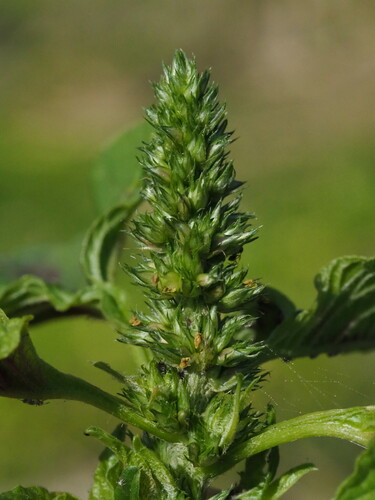
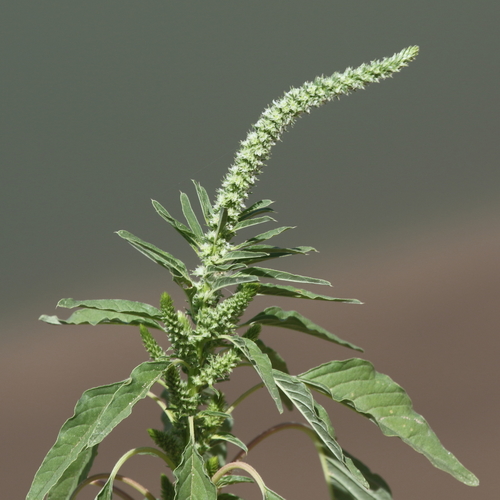
Amaranthus palmeri S.Watson is an edible flowering plant species in the Amaranthus genus. Its common names include carelessweed, dioecious amaranth, Palmer's amaranth, Palmer amaranth, and Palmer's pigweed. It is native to most of the southern half of North America, while populations in the eastern United States are most likely naturalized. It has also been introduced to Europe, Australia, and other regions. This plant is fast-growing and highly competitive. Like other amaranths, the leaves, stems, and seeds of Palmer amaranth are edible and very nutritious. Historically, it was widely cultivated and eaten by Native Americans across North America: they valued it both for its abundant seeds, and as a cooked or dried green vegetable. For thousands of years, other related Amaranthus species have been grown as crops for their greens and seeds in Mexico, South America, the Caribbean, Africa, India, and China. The nitrates found in Palmer amaranth leaves can make the plant toxic to non-ruminant livestock. This plant tends to absorb excess nitrogen from soil; when grown in over-fertilized soils, it can hold nitrate levels high enough to be excessive even for human consumption. Like spinach and many other leafy greens, amaranth leaves also contain oxalic acid, which can be harmful to people with kidney problems if consumed in large amounts. As of 2020, Palmer amaranth is rarely consumed. This is due to its toxicity to livestock, and a lack of widespread familiarity with amaranths as food in the United States, despite the plant being very common and drought-resistant. Unlike the grain and leaf amaranths cultivated in other regions, it has not been cultivated or improved through recent agricultural breeding. For these reasons, the primary economic importance of Palmer amaranth to American farmers is as a noxious weed that competes with more commercially valuable crops, rather than as a cultivated food crop itself.