About Alysicarpus vaginalis (L.) DC.
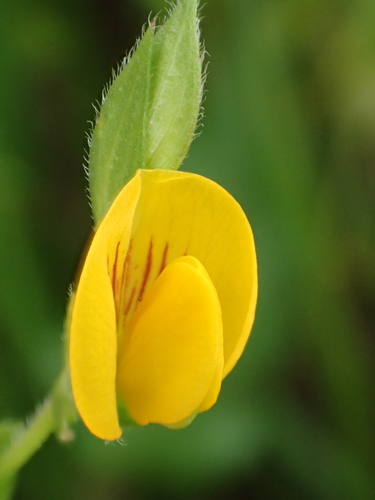
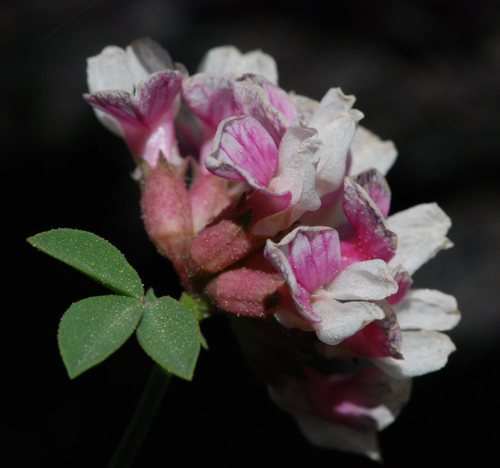
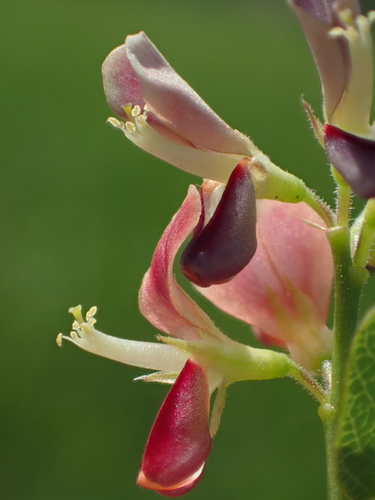
Alysicarpus vaginalis (L.) DC. can be an annual or perennial herb; different varieties may be one or the other, with some growing as perennials in wet conditions and as annuals in dry areas. Its stems can grow either erect or along the ground, and they are more often erect when growing in dense stands. Stems reach up to one meter in length and usually produce branches. Its leaves are not divided into leaflets, with leaf blades varying in shape and growing up to around 6.5 centimeters long. Racemes holding up to 12 flowers grow from stem tips and leaf axils. Each flower corolla is half a centimeter long, and can be red, purple, blue, or yellow. The fruit is a lightly hairy, cylindrical but compressed legume pod that grows up to 2.5 centimeters long. Dark red seeds are no larger than 1.5 millimeters long. Good companion plants for Alysicarpus vaginalis include grasses: St. Augustine grass (Stenotaphrum secundatum), hurricane grass (Bothriochloa pertusa), and Nadi blue grass (Dichanthium caricosum). It can also be grown alongside other legumes, such as Spanish clover (Desmodium heterophyllum) and showy pigeon pea (Cajanus scarabaeoides). A major disadvantage of this crop is its susceptibility to root-knot nematodes. Prevention measures include growing the plant on heavier soils to reduce infestation severity, and using nematode-resistant cultivars where available. Other pests that affect this plant include leaf-mining caterpillars. It acts as a host for the plume moth Exelastis crepuscularis. Multiple species of seed beetles in the genus Bruchidius complete their larval development inside the seeds of A. vaginalis, including two species that were recently described from this plant. This species can become weedy. It has been recorded as a weed of golf courses, where it easily survives frequent mowing. It also grows as a weed of roadsides and other disturbed habitats in Guam, Hawaii, and Fiji, and is considered an invasive species on many Pacific Islands. This plant is cultivated in pastures as livestock forage, and is sometimes cut for hay. Cattle and horses find it palatable, and one trial found sheep find it about as palatable as alfalfa. It is very tolerant of grazing and mowing. It grows most successfully in the tropics, but also grows well in warmer temperate regions. It loses leaves after light frosts and is killed by heavy frosts, but regrows once winter ends. It tolerates shade and can be grown under the cover of shrubs. It grows in many soil types, ranging from sand to clay, but does not tolerate high soil salinity. This crop is reported to yield up to six tons of hay per hectare. If allowed to set seed, it yields around 300 kilograms of seed per hectare. To improve its nitrogen fixation for soil improvement, seeds can be inoculated with the rhizobia used for cowpeas.