About Vicia caroliniana Walter
Leaf Arrangement
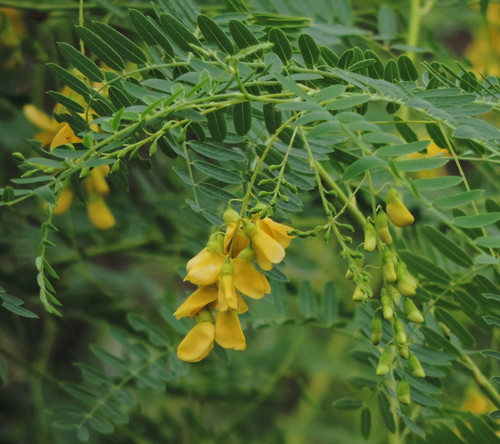
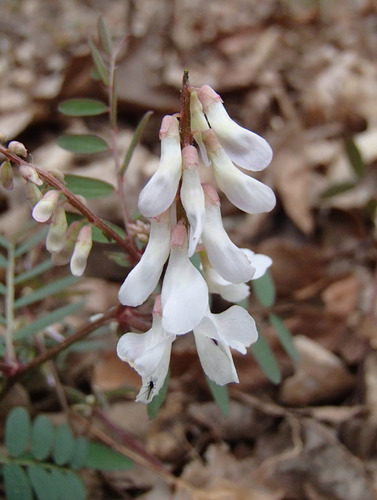
Vicia caroliniana Walter has alternately arranged compound leaves. Its leaflets are subalternate, elliptical to lanceolate in shape, and have hairy undersides.
Leaf Modifications
The leaf bases have paired stipules, and leaves end in single or bifurcated tendrils.
Stem Characteristics
Its stems are slightly winged and hollow.
Flower Structure
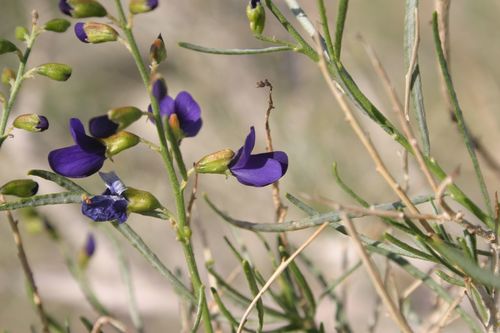
Flowers have five petals, grow in inflorescences that emerge from leaf axils. The anthers are orange, and the petals range in color from pale purple to white.
Fruit Characteristics
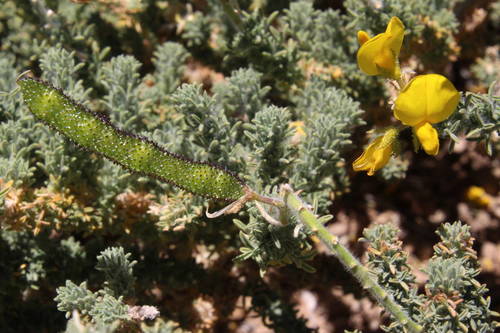
This species produces dehiscent seed pods that measure 1.5 to 3 centimeters (0.59 to 1.18 inches) long.
Medicinal Use Context
Native peoples of southeastern North America, including the Cherokee, use this plant for a range of medicinal purposes.
Pain and Cramp Remedies
It is used to treat back pain, local pain, muscular cramps, and twitching, to toughen muscles, and is rubbed onto stomach cramps.
Additional Medicinal Applications
A preparation of the plant is used for rheumatism and for an affliction referred to as "blacks", and it is taken for wind before a ball game.
Muscle Pain Treatment
An infusion of the plant is used for muscle pain by being rubbed onto scratches made at the site of pain.
Emetic Use
This infusion is also consumed as an emetic.
Combined Rheumatism Remedy
Taken internally combined with Pseudognaphalium obtusifolium ssp. obtusifolium, it is also used to treat rheumatism.