About Alouatta guariba (Humboldt, 1812)
Taxonomy and Common Names
The brown howler (Alouatta guariba), also called the brown howler monkey, is a species of howler monkey, a type of New World monkey.
Habitat Range
It inhabits forests in southeastern Brazil and far northeastern Argentina (Misiones).
Social Structure
It lives in social groups of 2 to 11 individuals.
Coat Color Variation
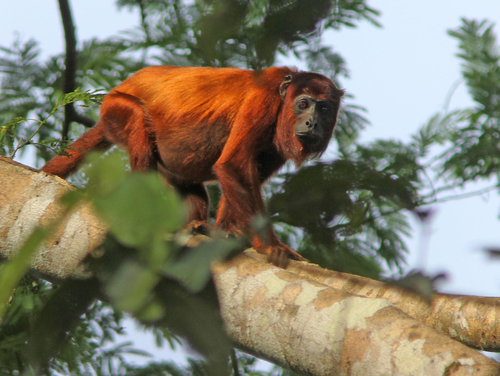
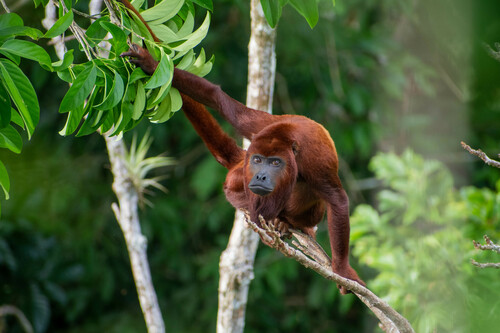
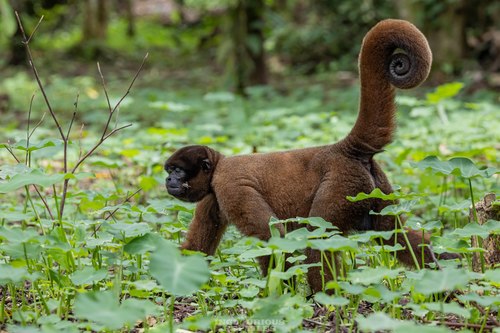
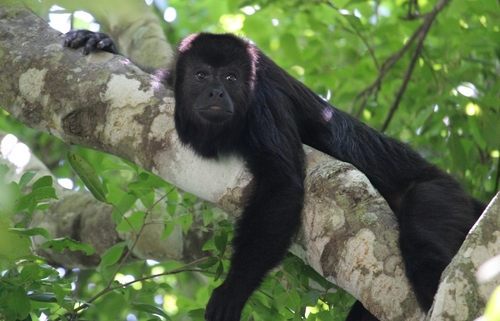
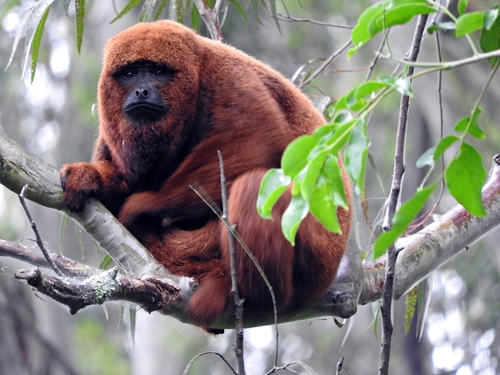
Despite its common name "brown howler", this species shows notable color variation: some individuals are mostly reddish-orange or black.
Subspecies
Two subspecies are recognized: the Northern brown howler (A. g. guariba), which is listed as critically endangered, and the Southern brown howler (A. g. clamitans).
Distribution
The brown howler occurs in the Atlantic Forest of South America, across the Brazilian states of Bahia, Espírito Santo, and Rio Grande do Sul, as well as Misiones Province in Argentina.
Captive Breeding Challenges
Breeding Alouatta howler monkeys in captivity is difficult, so relatively little is known about the reproduction of this species.
Breeding Seasonality
Brown howlers reproduce year-round, with no observed correlation between birth rates and rainy/dry seasons, or periods of higher availability of fruit or leaves.
Diet and Conception
Researchers suggest that because the brown howler has a folivorous (leaf-eating) diet, conception is less dependent on maternal physical condition.
Interbirth Interval Baseline
The average interbirth interval (IBI) for this species is 19.9 months, which matches the average IBI of other howler monkey species.
Factors Not Affecting IBI
Neither infant sex nor the number of females in a population appears to have a significant effect on IBI.
Confirmed IBI Influencing Factor
Only infant death reliably shortens a mother's interbirth interval, making it one of the few confirmed factors that affects brown howler IBI.