About Alocasia macrorrhizos (L.) G.Don
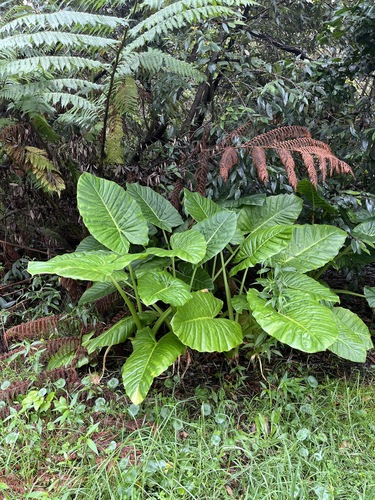
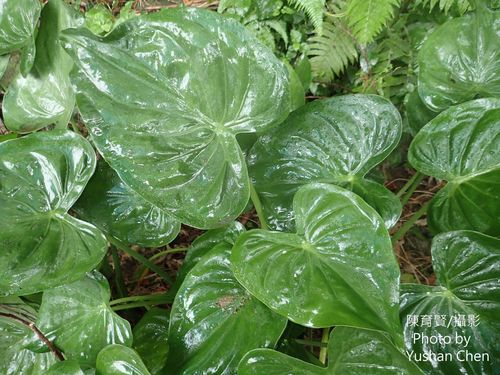
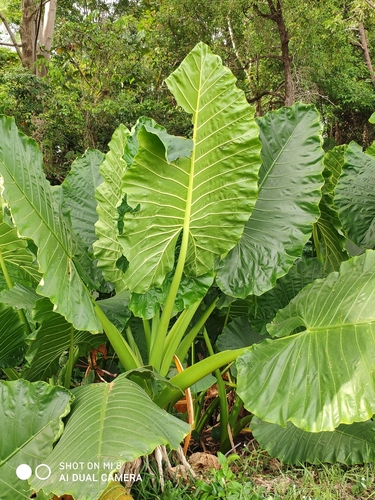
Alocasia macrorrhizos (L.) G.Don is a flowering plant species belonging to the arum family, Araceae. It is native to rainforests of Maritime Southeast Asia, New Guinea, and the Murray Islands group in the Torres Strait. It has been cultivated for a long time in South Asia, the Philippines, many Pacific islands, and other tropical regions around the world. Its common names include giant taro, giant alocasia, ʻape, biga, and pia. In Australia, it is called cunjevoi, a term that also refers to a marine animal.
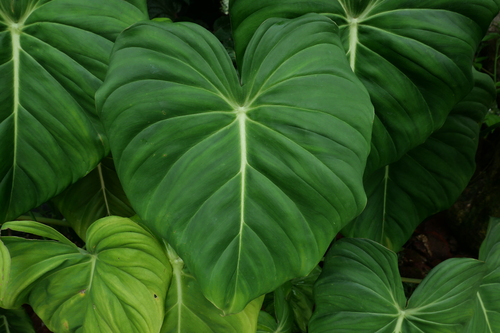
The sap of this plant can irritate skin, because it contains needle-like calcium oxalate crystals called raphides. However, the plant becomes edible after being cooked for a long time. Plants harvested later in their growth have higher amounts of raphides. Alocasia species are commonly sold in marketplaces in Samoa, Tonga, and other parts of Polynesia. Four varieties recognized in Tahiti are Ape oa, haparu, maota, and uahea. There is a Hawaiian saying about this plant: ʻAi no i ka ʻape he maneʻo no ka nuku, which translates to "The eater of ʻape will have an itchy mouth" and means there will be consequences for partaking of something bad. The plant's large, giant heart-shaped leaves can be used as impromptu umbrellas during tropical downpours.