About Allobates insperatus (Morales, 2002)
Taxonomic Classification
This species is scientifically classified as Allobates insperatus (Morales, 2002), originally described by Morales, V. R. (2002) in the Spanish-language publication "Sistematica y biogeografía del grupo trilineatus (Amphibia, Anura, Dendrobatidae, Colostethus), con descripción de once nuevas especies", published in Publicaciones de la Asociación de Amigos de Doñana 13: 1–59.
Adult Size
Adult males of this frog measure approximately 16.02 millimeters (0.631 inches) in snout-vent length, while adult females measure approximately 16.25 millimeters (0.640 inches).
Dorsal Skin Markings
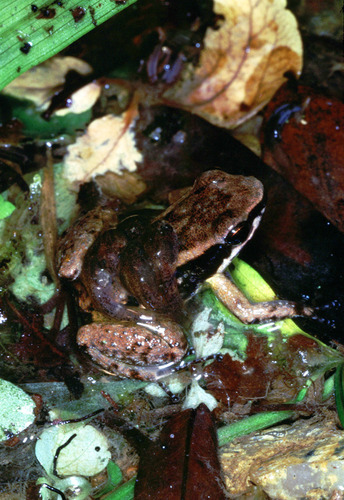
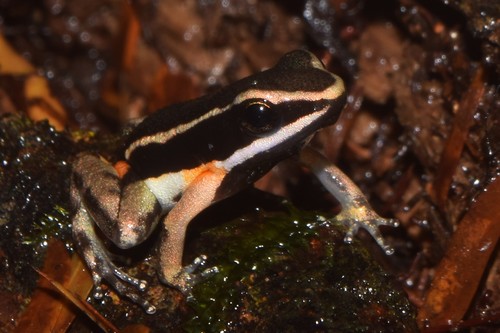
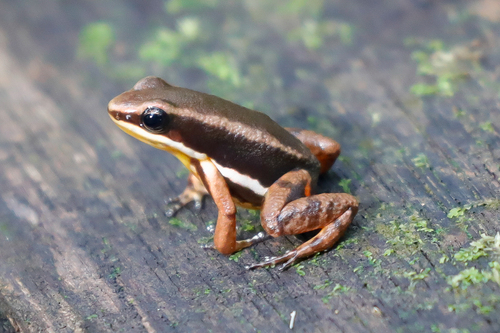
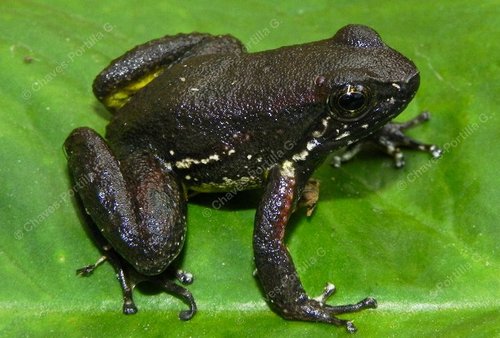
The dorsal skin is brown, featuring a light brown ventrolateral stripe and a dark brown dorsolinear stripe.
Ventrum and Throat Coloration
The ventrum may be cream or yellow-white, and the throat may be cream-yellow or light gray.
Microhabitat Hiding Spots
This frog has been observed hiding near tree roots, among palm leaves, and on leaf litter.
Forest Habitat Type
It inhabits both primary and secondary forest.
Stream Dependence
Unlike many of its closely related species, it does not require habitat near streams.
Elevation Range
It has been recorded at elevations between 250 and 570 meters above sea level.
Protected Area Occurrence
It has been observed within Güeppi-Sekime National Park, and its known range overlaps with several other protected areas: Parque Nacional Cuyabeno, Parque Nacional Yasuní, and Parque Nacional Sumaco Napo-Galeras.
Reproductive Stream Dependence
This species does not need to live near streams to reproduce.
Tadpole Aquatic Habitats
Its tadpoles have been observed swimming in streams, as well as in water that collects in fallen palm plants, fallen bamboo plants, and small pools.