About Aldrovanda vesiculosa L.
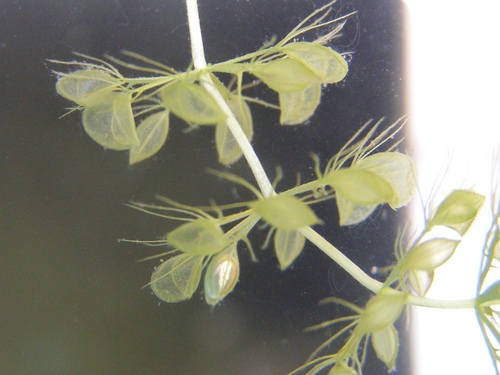
Aldrovanda vesiculosa L. is a rootless aquatic carnivorous plant. While seedlings do produce a short protoroot, this structure does not develop further and eventually senesces. The plant is made up of floating stems that grow between 6 and 40 cm (2 to 16 inches) long. Trap leaves that measure 2 to 3 mm (1/16 to 1/8 inch) grow in whorls of 5 to 9, arranged in close succession along the plant's central stem. The traps are supported by petioles that have air sacs to help the plant float. One end of the stem grows continuously, while the opposite end dies off as the plant grows. Growth is quite rapid: Japanese populations have been recorded growing 4 to 9 mm (3/16 to 3/8 inch) per day, and in optimal conditions, the plant can produce one or more new whorls every day. This species is the second most widely distributed carnivorous plant species, with only members of the genus Utricularia having a wider distribution. It is native to Europe, Asia, Africa, and Australia. Most of its spread occurs through the movement of waterfowl: plants stick to the feet of birds and are carried to new aquatic habitats along the birds' travel routes, so most populations are found along avian migratory routes. Over the last century, the species has become increasingly rare, and it is now listed as extinct in a growing number of countries. In the 1970s, carnivorous plant hobbyists introduced Aldrovanda vesiculosa to small backyard ponds in the U.S. states of New Jersey, Virginia, and the Catskills region of New York; it may be a potentially invasive species there due to its effects on aquatic invertebrates. Aldrovanda vesiculosa prefers clean, shallow, warm standing water with bright light, low nutrient levels, and a slightly acidic pH of around 6. It floats among other plants such as Juncus, reeds, and rice. It grows in a range of aquatic habitats including small fens, peat-bog pools, billabongs, lakes, lagoons, and river deltas. It favors oligo-mesotrophic and dystrophic systems that have low nutrient levels. It is most commonly found in shallow backwaters or the littoral zones of larger lakes, where it faces less competition from other aquatic plants and water levels stay relatively stable through the growing season. This species, also called the waterwheel plant, faces major conservation threats from habitat degradation and human-caused habitat modification. Residential and commercial development, along with agricultural and aquacultural activities, pose direct risks to the species, with their impacts on its aquatic habitats being a particular point of concern. The waterwheel plant is highly intolerant of habitat degradation, and even small changes to water chemistry can lead to local extinction of populations.