About Agastache scrophulariifolia (Willd.) Kuntze
Taxonomic Classification
Agastache scrophulariifolia (Willd.) Kuntze is a perennial herb in the mint family.
Growth and Flowering Period
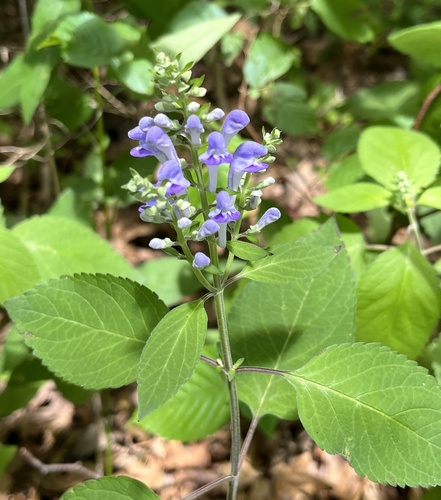
Mature individuals of this species can grow up to six feet tall, and it is classed as a late-flowering species.
Inflorescence Characteristics
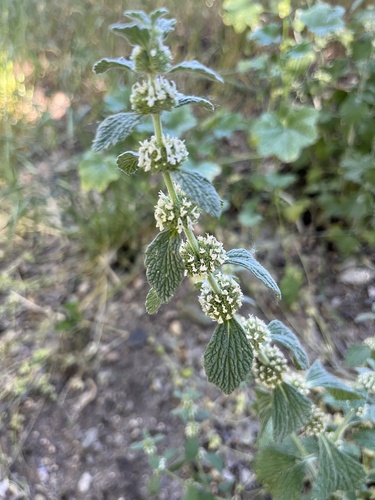
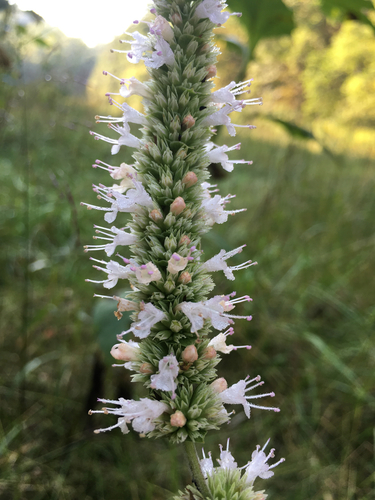
This species typically produces several spiked inflorescences.
Flower Traits
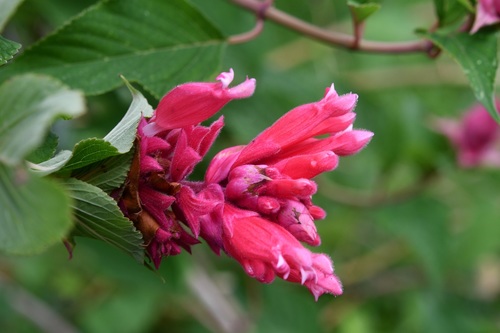
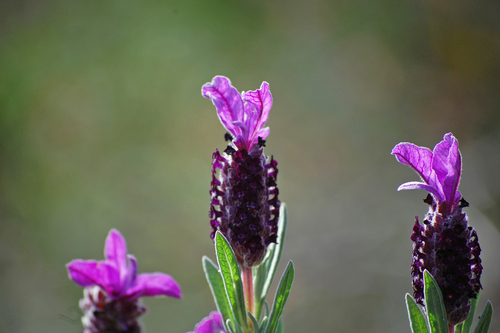
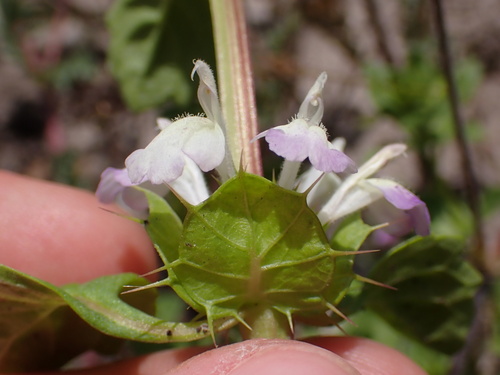
Its flowers do not all bloom at the same time, and their color ranges from lavender to pink.
Fruit Description
The fruit it produces is a dark brown nutlet.
Historical Distribution
Historically, this species was distributed across Connecticut, Washington D.C., Delaware, Georgia, Iowa, Illinois, Indiana, Kansas, Kentucky, Massachusetts, Maryland, Michigan, Minnesota, Missouri, North Carolina, Nebraska, New Hampshire, New Jersey, New York, Ohio, Pennsylvania, South Carolina, South Dakota, Tennessee, Virginia, Vermont, Wisconsin, West Virginia, and Ontario, Canada.
Current Distribution Status
Today, its range is severely reduced across much of its former distribution, and it has been completely extirpated in some areas.
Population Decline Causes
These population declines are mostly caused by habitat loss, deer predation, and resource competition with non-native plants.
Preferred Habitats
Agastache scrophulariifolia generally grows in riparian habitats, disturbed open areas, and meadows.
Habitat Suitability Factors
These locations are ideal for the species because they have reduced competition from other plants.
Soil and Germination Requirements
It grows well in sandy loamy soils, and its seeds require sunlight to germinate.
Additional Habitat Threats
When riparian habitats are altered or former farmland reverts to forest, Agastache scrophulariifolia experiences further habitat loss.
Formal Conservation Status
It is currently listed as endangered in Connecticut and Massachusetts, threatened in Maryland and Vermont, and a special concern in Kentucky and Tennessee.
Traditional Uses
The Meskwaki people use an infusion made from this species' root as a diuretic, and also use a preparation made from the plant's heads for medicinal purposes.