About Lavandula stoechas L.
Taxon Identity
Lavandula stoechas L. is an evergreen shrub.
Growth Form and Size
It typically grows 30 to 100 centimetres (12 to 39 inches) tall; the subspecies L. stoechas subsp. luisieri occasionally reaches up to 2 metres (6.6 feet) tall.
Leaf Characteristics
Its leaves are 1 to 4 cm long, greyish, and tomentose.
Inflorescence Bracts
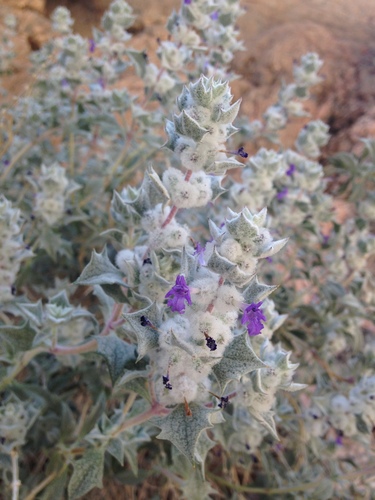
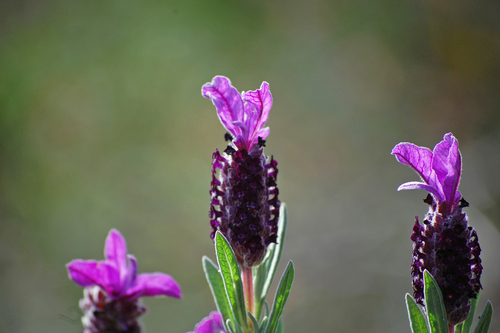
The inflorescence is crowned by a mass of purple elongated ovoid bracts around 5 cm long.
Flower Cross-Section Shape
Lower flowers form a tight rectangle in cross-section.
Calyx Tooth Appendage
The uppermost of the five teeth bears an inverted heart-shaped appendage.
Corolla Characteristics
The corolla is blackish-violet, up to 8 mm long, and forms an indistinct two-lipped shape.
Flower Color and Bloom Period
Flowers appear in late spring and early summer, ranging from pink to purple.
Flower Spike and Stem Morphology
They are produced on 2 cm long spikes at the top of slender, leafless stems that are 10 to 30 cm (4 to 12 in) long.
Floral Bracts
Each flower is subtended by a bract 4 to 8 mm long.
Sterile Apical Bracts
At the top of the spike sit several much larger, sterile bracts with no flowers between them; these bracts are 10 to 50 mm long, bright lavender purple, and rarely white.
Native Range Bloom Timing
In its native habitat, blooming occurs from March onwards in spring and early summer, with timing varying based on the local climate.
Cultivation Hardiness Comparison
In cultivation, this species is more tender than common lavender (Lavandula angustifolia), with lower frost resistance.
Oil Properties
Its oils are harsher and more resinous than those of common lavender.
Preferred Growing Conditions
Like other lavenders, it grows best in hot, dry, sunny conditions with alkaline soil, but it can tolerate a range of growing situations, though it may be short-lived.
Cold Hardiness Rating
It is hardy down to −10 °C (14 °F), suitable for USDA zones 8–10.
Cultivar Awards
Three cultivars of this species have earned the Royal Horticultural Society's Award of Garden Merit: 'Ballerina', 'Pretty Polly', and 'Willow Vale'.
Uses and Phytochemistry
For other uses, the flowers are used in aromatherapy to make infusions and essential oils, which contain the ketones d-camphor and d-fenchone, and the alcohols borneol and terpineol.