About Agama anchietae Bocage, 1896
Sexual Dimorphism
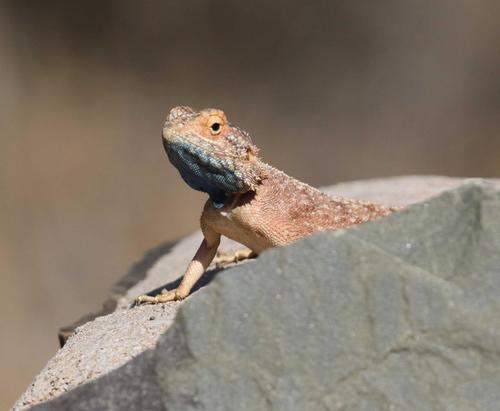
Agama anchietae Bocage, 1896 displays sexual dimorphism: males typically have wider heads and longer tails than females.
Colouration
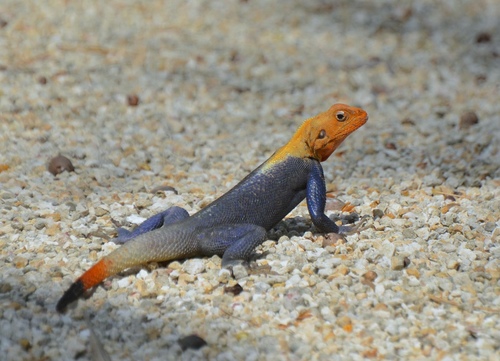
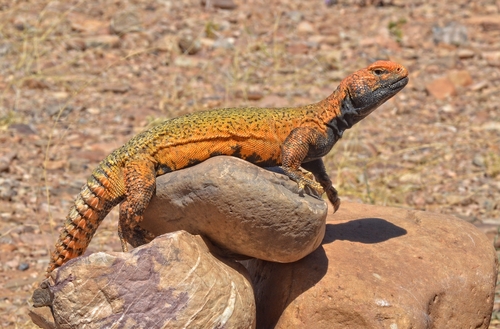
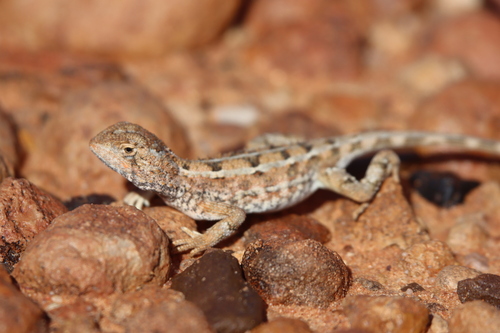
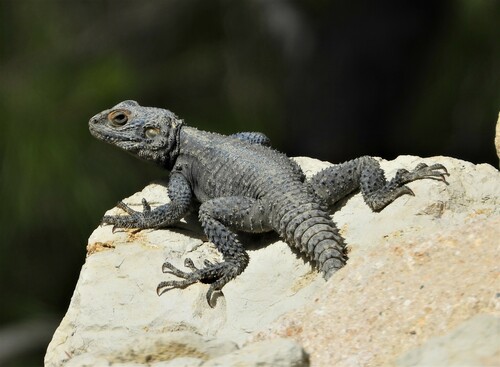
This species is one of the more cryptically coloured members of the genus Agama, unlike more brightly coloured species such as Agama planiceps.
Colouration Function
Its cryptic colouration is linked to its relatively solitary lifestyle, while colourful species like A. planiceps are much more social by comparison.
Distribution
This species occurs in Angola, Botswana, Congo, Namibia, and South Africa.
Habitat
It occupies a range of different habitats, including desert, shrubland, and grassland.
Reproduction
Agama anchietae is oviparous, meaning it reproduces by laying eggs.