About Afzelia africana Sm. ex Pers.
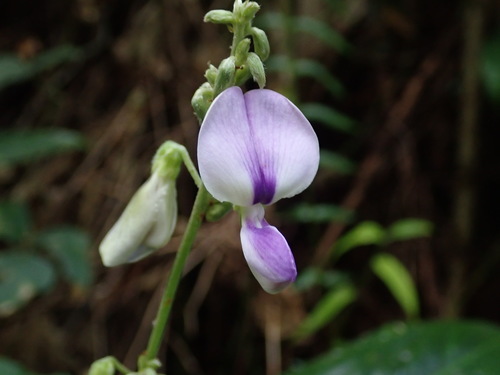
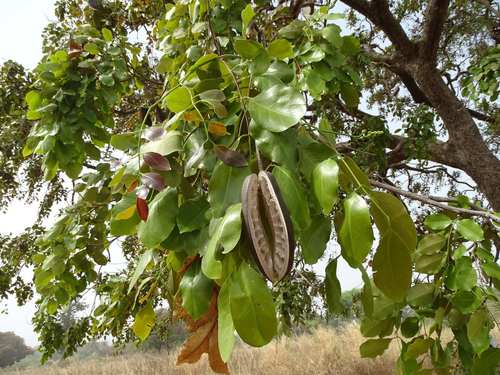
Mature Afzelia africana Sm. ex Pers. trees reach 6 to 30 meters in height, with trunk diameters that can reach 100 to 170 centimeters, and sometimes grow even larger. Their leaves are bright green, roughly 30 centimeters long, and hold 7 to 17 pairs of elliptic or ovate leaflets. This species produces white or greenish-white flowers marked with a red or pink stripe, arranged in panicles. After flowering, it forms dark brown or black shiny fruits that hold poisonous black seeds, each attached to an edible orange aril. This species occurs in Benin, Burkina Faso, Cameroon, the Central African Republic, Chad, DRCongo, Ivory Coast, Ghana, Guinea, Guinea-Bissau, Mali, Niger, Nigeria, Senegal, Sierra Leone, Sudan, Togo, and Uganda. It most commonly grows in dense evergreen forests, but can also be found in savanna and the coastal forests of East Africa. Afzelia africana was used for ship building in the Middle Ages, and it is one of the traditional woods used to make djembe drums. Thirty-eight tons of Afzelia africana wood sourced from Ghana was used to construct the Jewel of Muscat, a reconstructed 9th-century Arab merchantman; curved individual trees were selected for the ship's frames and timbers. The trade name for the wood of this species is doussié, and the wood is known for its resistance to decay and termites. The leaves of this tree are sometimes used as livestock fodder. In West Africa, the bark is frequently used for medicinal purposes, and some cultural groups consider the tree to be a refuge of invisible spirits.