About Aerodramus terraereginae (E.P.Ramsay, 1875)
Size and Morphometrics
This species, Aerodramus terraereginae, measures 11–12 centimetres (4.3–4.7 in) in overall length, with a wing length ranging from 107–118.2 millimetres (4.21–4.65 in) and a body weight of 10.5–12.5 grams (0.37–0.44 oz).
Plumage Coloration
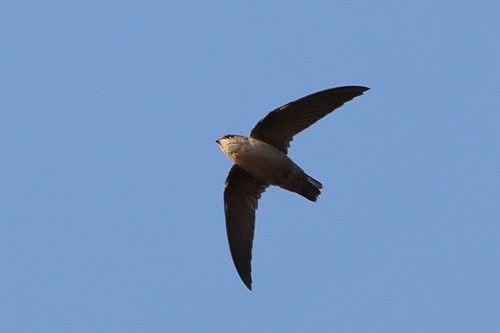
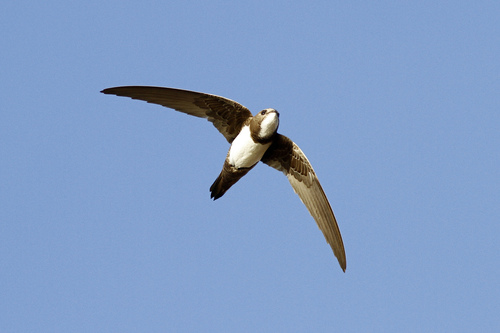
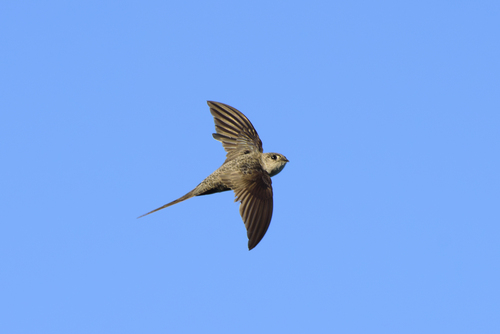
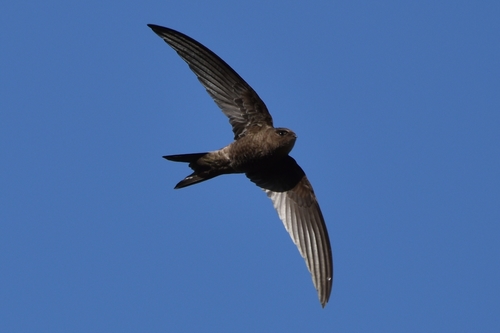
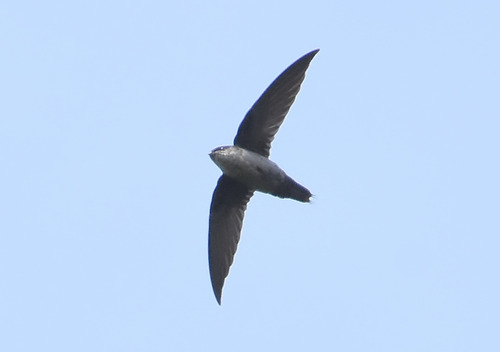
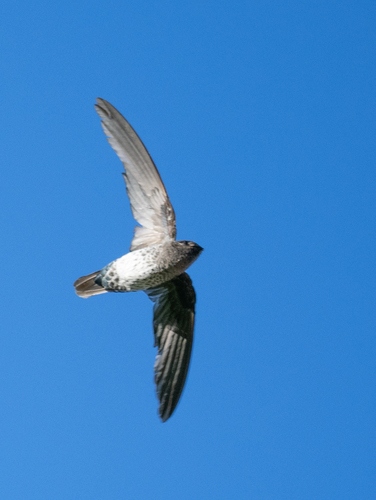
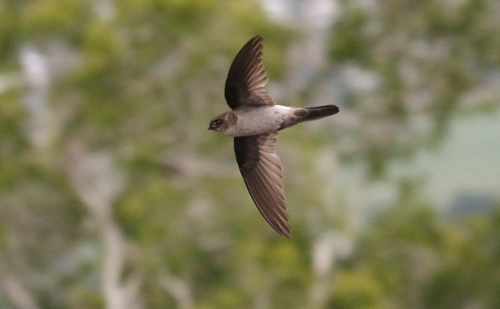
Its upperparts are dark grey-brown, while its underparts are uniformly greyish. It has pale feathers on the forehead and lores.
Rump and Tail Morphology
The rump is normally pale greyish, but may occasionally be darker, and the tail is slightly forked.
Subspecies Morphology
The subspecies A. t. chillagoensis is smaller and paler than the nominate form, with an average weight of around 9.39 grams (0.33 oz).
Vocalizations and Echolocation
This swiftlet has a high-pitched flight call, and produces metallic clicking calls for echolocation when inside its breeding caves.
Nominate Subspecies Range
The nominate subspecies A. t. terraereginae is found in tropical north-east Queensland, Australia, ranging from the Claudie River on Cape York Peninsula south to the Eungella Range near Mackay.
Nominate Subspecies Habitat and Elevation
It occurs mainly near the coast, including on multiple offshore islands, and can be found from sea level up to 1,000 metres (3,300 ft) elevation, though it is most common below 500 metres (1,600 ft).
Chillagoensis Subspecies Distribution
The subspecies A. t. chillagoensis occurs further inland, in the area around Chillagoe west of the Great Dividing Range.
Breeding Period
Breeding for this species takes place from July to March.
Breeding Colony Location
It breeds in colonies that can hold hundreds of individuals, which are located in caves, or sometimes among boulders.
Nest Characteristics
Nests are attached to cave walls or ceilings 2–20 metres (6 ft 7 in – 65 ft 7 in) above the ground; they are translucent and basket-shaped, built from saliva mixed with grasses, casuarina needles, twigs, and feathers.
Clutch Details
Two clutches are laid per breeding season, and each clutch contains one single white egg.
Incubation Process
Both parents incubate the egg for approximately 26.5 days. Incubation of the second egg is warmed by the first chick.
Juvenile Development
Juveniles remain in the nest for around 46–51 days after hatching.
Diet Composition
The Australian swiftlet feeds while flying, preying on insects and drifting spiders.
Foraging Habitat
It forages in flocks over rainforest edges, savanna, pastures, beaches, and gorges.
Foraging Behavior
It typically feeds within 30 kilometres (19 mi) of its breeding colony, and leaves the nest for approximately 30-minute hunting periods.