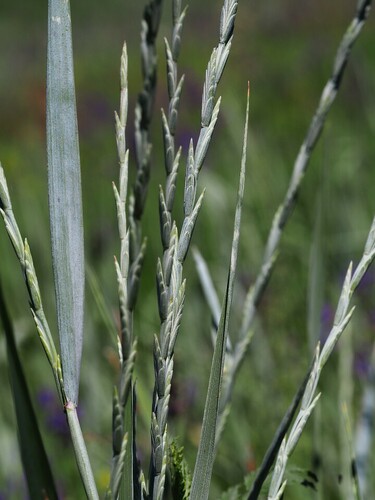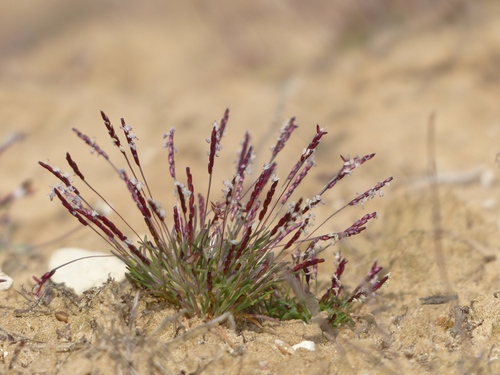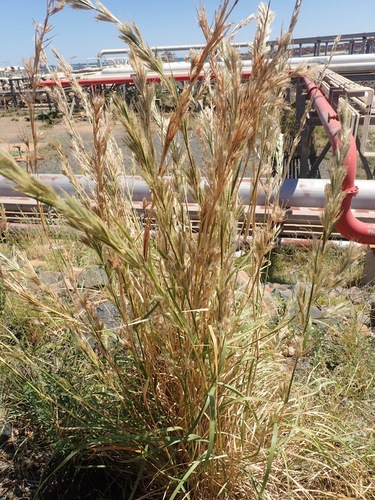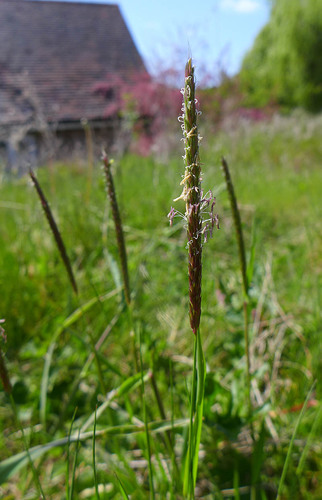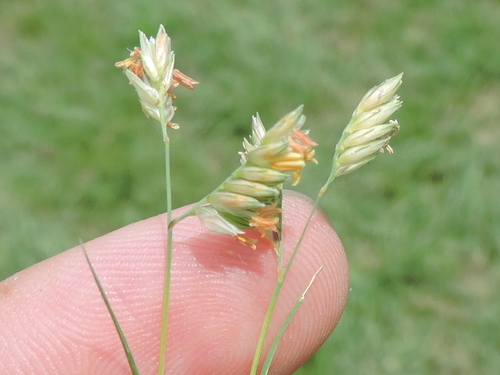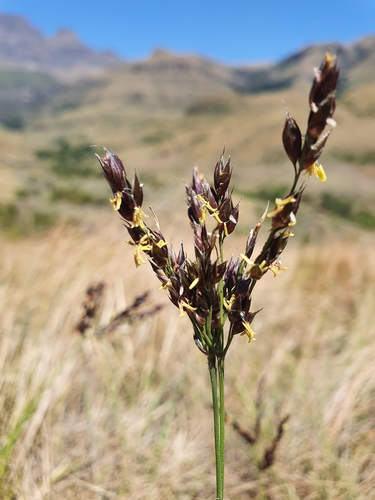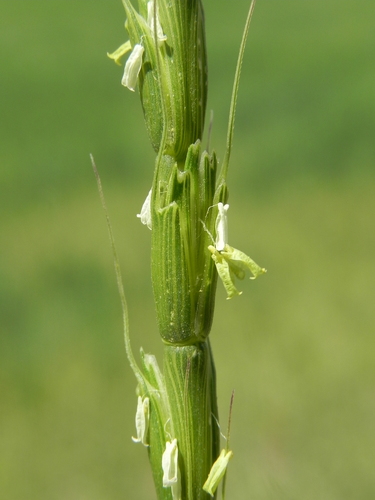
About Aegilops cylindrica Host
Aegilops cylindrica, commonly called jointed goatgrass, is an annual grass species belonging to the tribe Triticeae, the same group that includes wheat and other cereals. It is native to Southern Europe and Russia, and is not originally from North America. After its introduction to North America in the late 19th century, it has become a damaging invasive weed. Because it is closely related to winter wheat, controlling jointed goatgrass is very challenging. Its seeds are similar in shape and size to winter wheat seeds, so they are hard to remove during grain cleaning processes. Shared genetics between the two species also mean there are no registered herbicides that can eliminate jointed goatgrass without harming winter wheat. This causes reduced yields and lower quality winter wheat, creating major problems for farmers. Jointed goatgrass is a winter annual grass, native to Southern Europe and Russia. In the United States, where it is now widely distributed across western and central regions, it is classified as a problematic invasive weed. It entered the US multiple times at different locations; the first introduction was likely in the late 19th century, when Mennonite settlers from Russia brought Turkey winter wheat to Kansas. The first recorded specimen of jointed goatgrass in the US was collected in Centerville, Delaware in 1870. Later samples collected in 1910 showed that jointed goatgrass had escaped from experimental plots on the South Dakota State University campus in Brookings, South Dakota. In 1999, it was reported that jointed goatgrass had infested an estimated 2 million hectares (4.9 million acres) in the US, and the infested area was increasing by around 20,000 hectares (49,000 acres) each year. In 1986, jointed goatgrass was recorded infecting less than 1% of winter wheat fields in seven counties of Nebraska, but it still ranked as one of the ten most troublesome weeds, and was a concern for 13% of respondents to a 1984 farmer survey. After the seed-bearing joints of jointed goatgrass disarticulate, human activities, wind, and farm machinery all work to spread its seeds. Wind dispersal is not very effective for this species, however, because of the large size of its joints. Human activities that contribute to spread include planting contaminated wheat seed, letting joints blow from grain-hauling trucks, moving combines between different fields, and using straw spreaders attached to combines. Researcher Steven Miller has noted that some US states lack laws that prevent contaminated winter wheat from being certified as clean, which allows contaminated seed to continue being planted. Combines fitted with straw spreaders tend to spread jointed goatgrass joints farther than combines without this equipment. Additionally, because the joints can float, field runoff can carry them into rivers where they aggregate. They can then create new infestations in moist depressions, field draws, and along drainageways. Growers and researchers have observed that jointed goatgrass has higher germination and emergence rates in compacted soils, such as the wheel tracks left by tractors, than it does in looser, uncompacted soils.