About Aconitum plicatum Rchb.
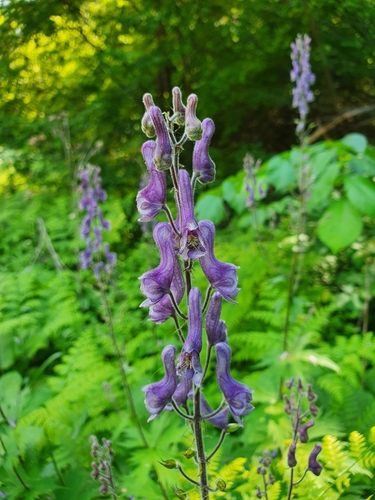
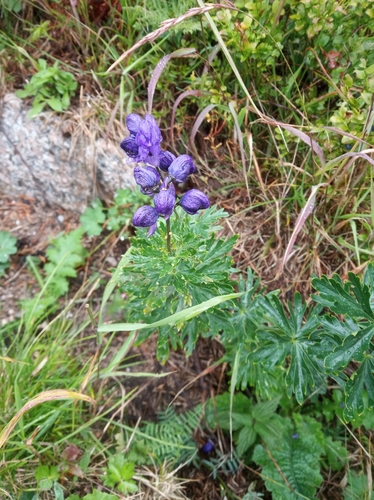
Aconitum plicatum Rchb. is a perennial forb that grows from rhizomes. It can be tall and spindly, with a growth habit ranging from erect to scandent, and reaches a mature height between 0.3 and 1.5 meters. It produces divided leaves. Its primary flowering period extends from July to September. The inflorescence is paniculate, and may be simple or branched with few to many side branches. The perigon is blue or purple, and is densely covered in crooked trichomes on both its outer and inner surfaces. The peduncle may be hairy or hairless, while the linear to triangular bracteoles are always hairless. Pollination of this species is carried out by insects, including Bombus species and other insect groups. After flowering, it produces pod-like follicle fruits. Aconitum plicatum is poisonous due to the presence of alkaloids such as aconitine. This wildflower is native to Europe, specifically occurring in Germany, the Czech Republic, and Poland. Its natural inhabited habitats include tall herbaceous vegetation and ravine forests. It is also cultivated as an ornamental plant.