About Acanthaceae
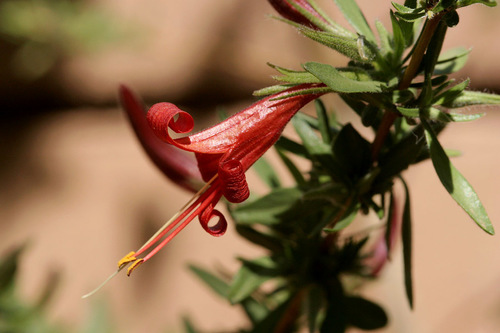
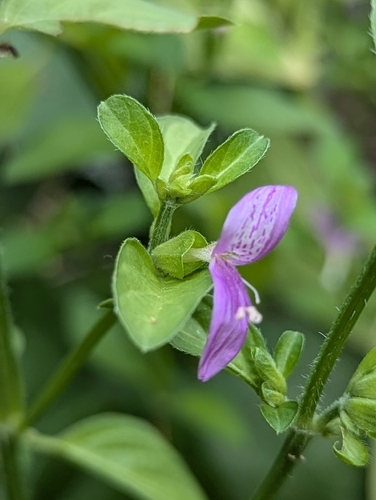
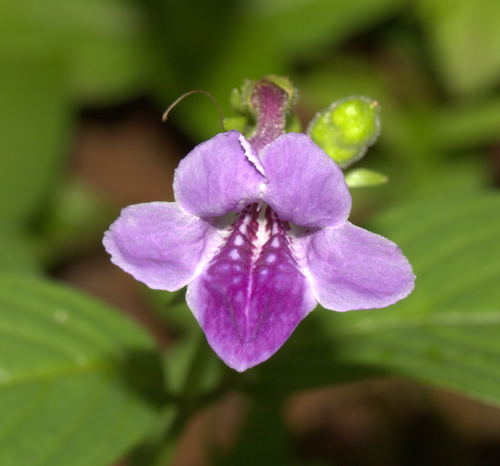
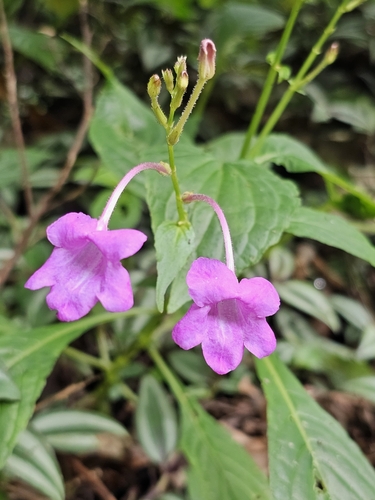
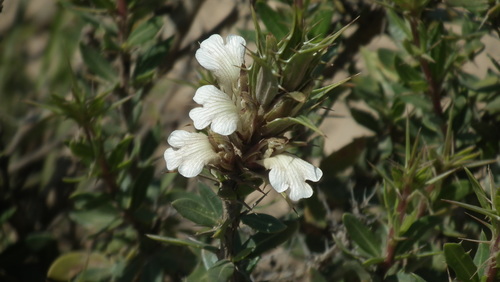
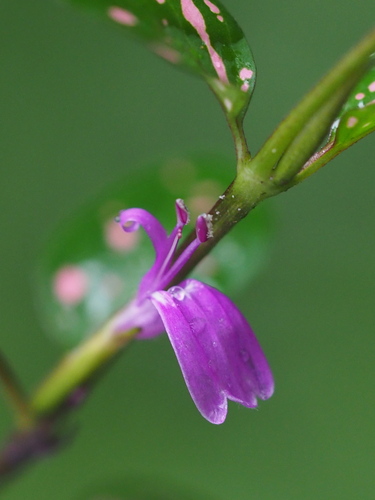
Plants in the Acanthaceae family have simple, opposite, decussated leaves that lack stipules, with entire margins that may sometimes be toothed, lobed, or spiny. The leaves may contain cystoliths, which are calcium carbonate concretions that appear as streaks on the leaf surface. Flowers of Acanthaceae are perfect, ranging from zygomorphic to nearly actinomorphic, and arranged in inflorescences that take the form of a spike, raceme, or cyme. Typically, each flower is subtended by a colorful bract; in some species, this bract is large and showy. The calyx usually has four or five lobes, while the corolla is tubular and either two-lipped or five-lobed. Stamens occur in numbers of either two or four, arranged in pairs and inserted onto the corolla. The ovary is superior, bicarpellated, and has axile placentation. The fruit is a two-celled capsule that dehisces in a somewhat explosive manner. In most species, seeds are attached to a small, hooked modified funiculus called a jaculator or retinaculum, which ejects seeds from the capsule. This trait is shared by all members of the clade Acanthoideae. A 1995 study of seed expulsion in Acanthaceae used high-speed video to show that retinacula propel seeds away from the parent plant when fruits dehisce, helping the plant achieve maximum seed dispersal range. One species well known to temperate gardeners is bear's breeches, Acanthus mollis, a herbaceous perennial with large leaves and flower spikes that can grow up to 2 meters tall. Tropical genera familiar to gardeners include Thunbergia and Justicia. Avicennia, a genus of mangrove trees, was usually previously placed in Verbenaceae or its own separate family Avicenniaceae, but is now included in Acanthaceae by the Angiosperm Phylogeny Group. This placement is based on molecular phylogenetic studies that show the genus is associated with this family. For medicinal uses, leaves are traditionally the most commonly used part of Acanthaceae plants, and they are applied externally to treat wounds. Some research has indicated that plants in Acanthaceae have antifungal, cytotoxic, anti-inflammatory, anti-pyretic, antioxidant, insecticidal, hepatoprotective, immunomodulatory, anti-platelet aggregation, and antiviral potential. As an example, Acanthus ilicifolius, whose chemical composition has been heavily researched, is widely used in ethnopharmaceutical applications, including Indian and Chinese traditional medicine. Various parts of Acanthus ilicifolius have been used to treat asthma, diabetes, leprosy, hepatitis, snake bites, and rheumatoid arthritis. The leaves of Acanthus ebracteatus, which are noted for their antioxidant properties, are used to make Thai herbal tea in Thailand and Indonesia.